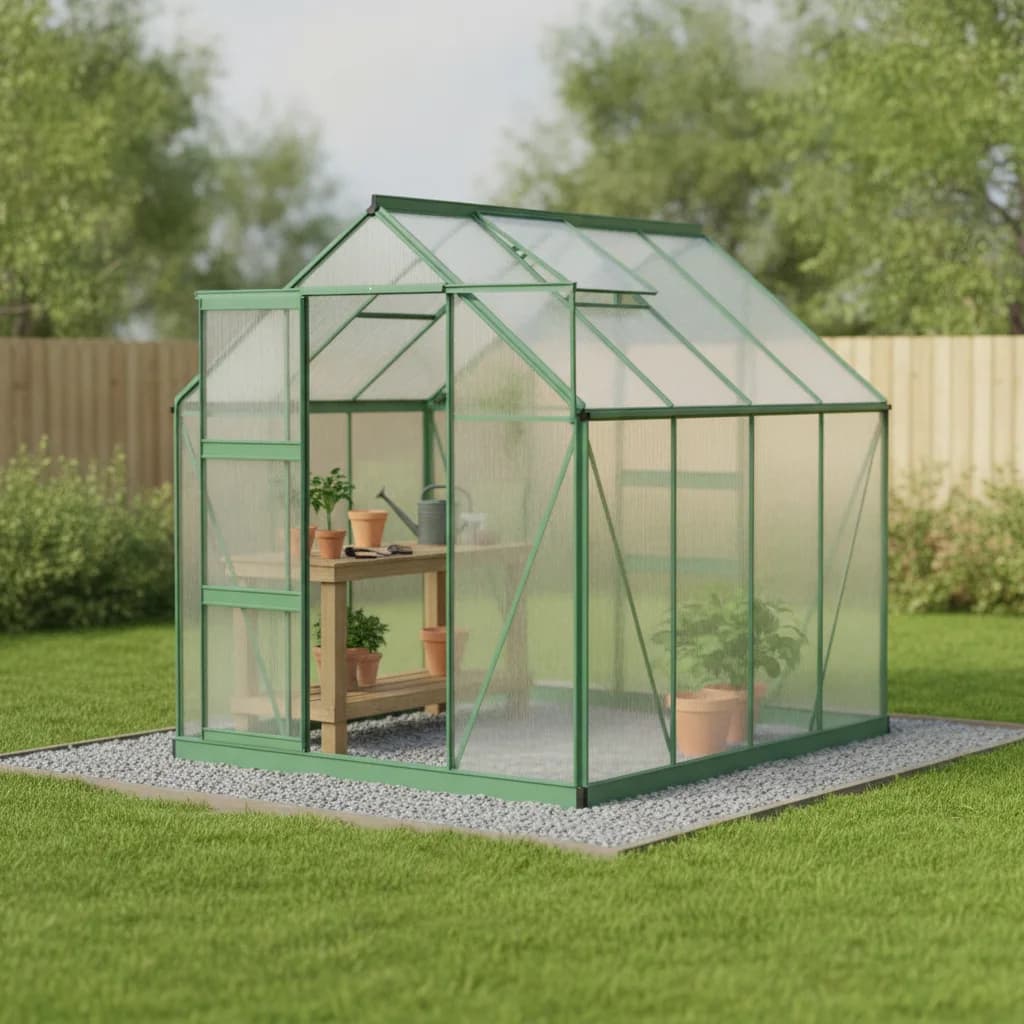
Palram Canopia kits run about $1,500 to $6,000. Compare Glory and Balance, real project cost, assembly, warranty fine print, wind risks, and buyer fit.
Final Decision
Quick answer: Palram/Canopia is the mid-market greenhouse default, and for most step-up buyers it is the right call. Twin-wall polycarbonate on an aluminium frame, widely stocked, DIY-friendly, priced roughly $1,500 to $6,000 for the kit. The Glory line uses 10mm twin-wall and carries a 10-year warranty, the Balance and lighter lines run 5 years. Multi-wall polycarbonate retains more heat than single glass and resists hail, but ask for the exact U-value because thickness alone is not a thermal specification. On a proper base a Palram lasts well past a decade. Where it falls short of a premium glasshouse: the aluminium frame is lighter, the panels sit in channels and can pop out if the greenhouse is under-anchored, the hardware and instructions are fiddly, and the polycarbonate yellows over time. Buy it for value that lasts, not for heirloom looks.
Best for
Step-up buyers deciding whether Palram/Canopia is enough greenhouse, and where it genuinely falls short of glass.
Wrong fit
Buyers set on a formal glass house that lasts 20-plus years and looks the part. That is the premium lane, not this one.
Tradeoff
Palram/Canopia buys real insulation, hail resistance, and a decade-plus of service for mid-market money. You give up the heavier frame, the clear formal look, and the multi-decade lifespan of a glasshouse.
Palram/Canopia is the greenhouse most step-up buyers should look at first, for a simple reason: it does the job for a fraction of the glass price. Twin-wall polycarbonate on an aluminium frame, sold under the Canopia brand, widely stocked, and buildable by a determined DIYer. For seed-starting, propagation, overwintering, and season extension, a well-based Palram grows exactly the same plants as a $20,000 glasshouse. We don't sell greenhouses. We save you from buying the wrong one, so this review is straight about where it shines and where it falls short.
Before the verdict, one rule: the kit price is not the project price. A Palram is a kit that still needs a base you cannot skip, from the real cost of a greenhouse. And if you have not settled glazing at all, glass vs polycarbonate is the decision that lands most growers on a house like this. The Palram/Canopia brand profile lists the key models, warranty terms and the alternatives we compare it against.
Quick Answer: Palram/Canopia at a Glance
Dimension
Palram/Canopia
Glazing
Twin-wall polycarbonate, up to 10mm (Glory)
Frame
Aluminium
Kit price
~$1,500-$6,000
All-in with base
~$2,200-$8,000
Warranty
5 years (Balance), 10 years (Glory)
Heat retention
Better than single glass; request the exact model U-value
Hail resistance
Very good, flexes instead of shattering
Best for
Step-up buyers, growing, cold and hail climates
Falls short on
Frame weight, formal looks, multi-decade lifespan
Figures are typical and worth verifying at write time against the current line-up and where you buy.
The Line-Up: Balance, Glory, and the Rest
Palram/Canopia sells a clear ladder, and knowing it saves you money. The Glory is the strong pick: 10mm twin-wall polycarbonate, a sturdier frame, and a 10-year warranty, the one to buy if you want the most greenhouse Palram makes. The Balance is the volume seller: diffused twin-wall roof panels combined with clearer wall panels so you get insulation up top and some view at the sides, on a 5-year warranty, at a lower price. The hexagonal Oasis doubles as a garden feature, and lines like the Americana and the lean-to and hybrid models round out the range. For most growing buyers, the Balance is the sensible default and the Glory is the upgrade worth it in a harsh climate.
Where Palram/Canopia Is Strong
Start with the fit, because it is genuinely good. Multi-wall polycarbonate retains more heat than single glass, but panel construction matters as much as thickness, so ask for the exact model U-value. For context, Alabama Extension publishes 0.65 for 8mm twin-wall polycarbonate and 1.13 for single glass, about 42 percent less conductive heat loss through that cited panel. It diffuses light evenly, which growers often prefer to direct light. It flexes under hail and impact instead of shattering, a real advantage in hail country and under trees. It is widely stocked at big-box and greenhouse retailers, so you can price it, see it, and buy it today rather than waiting on a bespoke build. And the aluminium frame does not rot or need painting. On a proper gravel-and-timber base, a Palram Glory routinely gives well over a decade of service. For a step-up buyer who killed a cheap kit and wants one that lasts, this is the mid-market answer: 10mm polycarbonate, no glass premium, and a frame that does not rot.
Where Palram/Canopia Falls Short
Now the caveats, paired with who should still buy it. The aluminium frame is lighter and thinner than a premium glasshouse frame, so it feels less substantial and is less forgiving of a bad base, that is fine for the value buyer, not for someone who wants heirloom heft. The polycarbonate panels sit in channels held by clips, and on an under-anchored greenhouse or an unlevel base they can pop out in a real blow, which is the single most common owner complaint and entirely preventable with a proper base and anchoring. The assembly is a genuine project: many owners find the hardware fiddly and the instructions thin, so budget a careful weekend and a second pair of hands. And like all polycarbonate, the panels yellow slowly over 10 to 15 years and are the part you eventually replace. None of these make it a bad greenhouse. They make it a mid-market greenhouse, which is exactly what it is priced as.
Palram/Canopia vs a Premium Glasshouse
Dimension
Palram/Canopia
Premium glass (Hartley, Alitex)
Kit price
$1,500-$6,000
$8,000-$40,000+
Glazing
Twin-wall poly, yellows over time
Toughened glass, stays clear
Frame
Lighter aluminium
Heavy hand-built aluminium
Warranty
5-10 years
25-30 years
Look
Working structure
Formal heirloom
Insulation
Better (R-1.7)
Worse (single glass R-0.9)
Plants grown
The same
The same
Read those numbers and the choice is clear. You are not paying the glass premium to grow better plants, you are paying it for looks, clarity, and a lifespan measured in decades. If those matter to you, the premium lane is worth it, weighed in Hartley vs Alitex. If they do not, Palram/Canopia does the real work for a fifth of the money, and choosing it is not settling. Premium vs mid-range runs the same comparison in dollars at a matched entry size.
The nearer comparison, and the one most buyers actually run, is against the two kits one step up. A Glory 8x12 at 99 square feet is a $3,750 to $7,400 all-in DIY project, against $8,800 to $10,800 for an Exaco Riga 3 and $10,500 to $12,800 for a Janssens Junior Victorian 24 at almost the same footprint, checked August 16, 2026. The base, vent, warranty and replacement-parts arithmetic behind those three numbers is in Palram vs Exaco Riga vs Janssens, including the detail dealers leave out: Palram's 10-year warranty is prorated from year two and is void if the greenhouse is not anchored.
If a published snow or wind number is why you are stepping up, compare Planta before jumping to Riga. Its Gen III kits use a galvanized steel frame and 6mm double-wall polycarbonate, with Sigma 20 at 55 psf and 65 mph and Sungrow 20 and 26 at 75 psf and 65 mph when properly anchored, checked September 26, 2026. Planta costs more than many Palram sizes and takes longer to assemble. It is the stronger fit when the structural number matters more than 10mm glazing or an easier retail purchase. Get the exact model revision and rating in writing before buying. Every kit with a published snow and wind figure, the Glory included, is compared in the heavy duty greenhouse kits.
If it is diffused insulation rather than a rating that has you looking past Palram, the sideways comparison is Solexx, not a step up in price tier. Palram vs Solexx prices both at a matched 8x16 footprint and reads both warranty documents for what they actually disclose.
If skipping assembly entirely is the actual draw, compare against a delivered wood structure instead of another kit. Yoderbilt vs Palram prices both at a matched 8x12 footprint and finds the DIY-versus-delivered price gap has nearly closed at that size.
Which Buyer Should Get a Palram/Canopia
Buy it if you want a greenhouse that lasts more than a few seasons at mid-market money, your use is growing rather than showpiece looks, you garden in a cold or hail-prone climate where polycarbonate's insulation and toughness pay off, and you will build a proper base and anchor it. For that buyer, it is one of the best-value greenhouses you can buy, and the Glory is the pick if the climate is harsh.
Look elsewhere if you want a formal glass house that looks the part in a designed garden and lasts 20-plus years, in which case see best greenhouses and the premium lane. If you want a solid US-built wood-framed house delivered assembled, compare the Yoderbilt review. If you are considering Canopia's resin-frame lane, the Rion review explains where its price and weather limits fit. And if what you actually want is a heated room to work or read in through winter, that is an office pod, not a greenhouse, weighed at backyardoffice.guide.
For most step-up buyers, yes. Its multi-wall polycarbonate retains more heat than single glass, resists hail, is widely available and DIY-friendly, and on a proper base it lasts well past a decade, all at mid-market money. Ask for the exact U-value instead of assuming every 10mm or twin-wall panel performs the same. It is worth it precisely because you are not overpaying for glass you do not need. It is not worth it if what you want is a formal heirloom glasshouse, which is a different and far more expensive lane.
Do Palram greenhouse panels blow off in wind?
They can, and it is the most common complaint, but it is preventable. The polycarbonate panels sit in channels held by clips, so on an unlevel base or an under-anchored greenhouse a strong wind can lift and pop them. Built on a level gravel-and-timber or slab base and properly anchored, they hold fine. The base and anchoring are not optional on any polycarbonate kit, and they are cheap compared to replacing panels. The guidance is in wind and anchoring.
Is the Glory or the Balance the better Palram to buy?
The Glory if your climate is harsh, the Balance if you want to save money. The Glory uses 10mm twin-wall, a sturdier frame, and a 10-year warranty, so it holds heat and stands up better in cold and wind. The Balance combines diffused twin-wall roof panels with clearer walls for some view, on a 5-year warranty, at a lower price. For a mild climate and a budget, the Balance is plenty. For real winters, the Glory upgrade earns its cost.
How hard is a Palram/Canopia greenhouse to assemble?
It is a real weekend project, not a quick job, and this is a frequent owner frustration. Many buyers find the hardware fiddly and the instructions thin, so plan a careful weekend, a clear level base ready first, and a second pair of hands for the panels and roof. It is entirely doable by a patient DIYer, but go in expecting a build, not a snap-together tent. A level base makes the whole job far easier.
How long does a Palram greenhouse last?
On a proper base, well over a decade, with the polycarbonate panels the part most likely to need replacing first. The panels yellow slowly under UV over roughly 10 to 15 years, while the aluminium frame lasts much longer. Good UV-coated panels slow the fade. The biggest factor in its lifespan is not the brand, it is whether you built a level base and anchored it, since a bad base is what racks the frame and pops the panels early.
Palram/Canopia or a cheap Amazon greenhouse kit?
Palram, without much contest, if you want it to last. The cheap flat-pack kits use thin single-wall glazing that yellows and cracks and frames that flex in wind, and they often do not survive a second winter. Palram's twin-wall polycarbonate and aluminium frame are a real step up in insulation, toughness, and lifespan, which is why it sits in the value-that-lasts lane and the throwaway kits do not. Spend the extra if you want a greenhouse rather than a season.
These guides are built from manufacturer documentation, public specifications, primary research where health claims matter, and repeated buyer questions that show up in real ownership and installation decisions.
Manufacturer responses can clarify pricing bands, warranty terms, support footprint, or common mistakes. They do not move a page up the shortlist on their own.