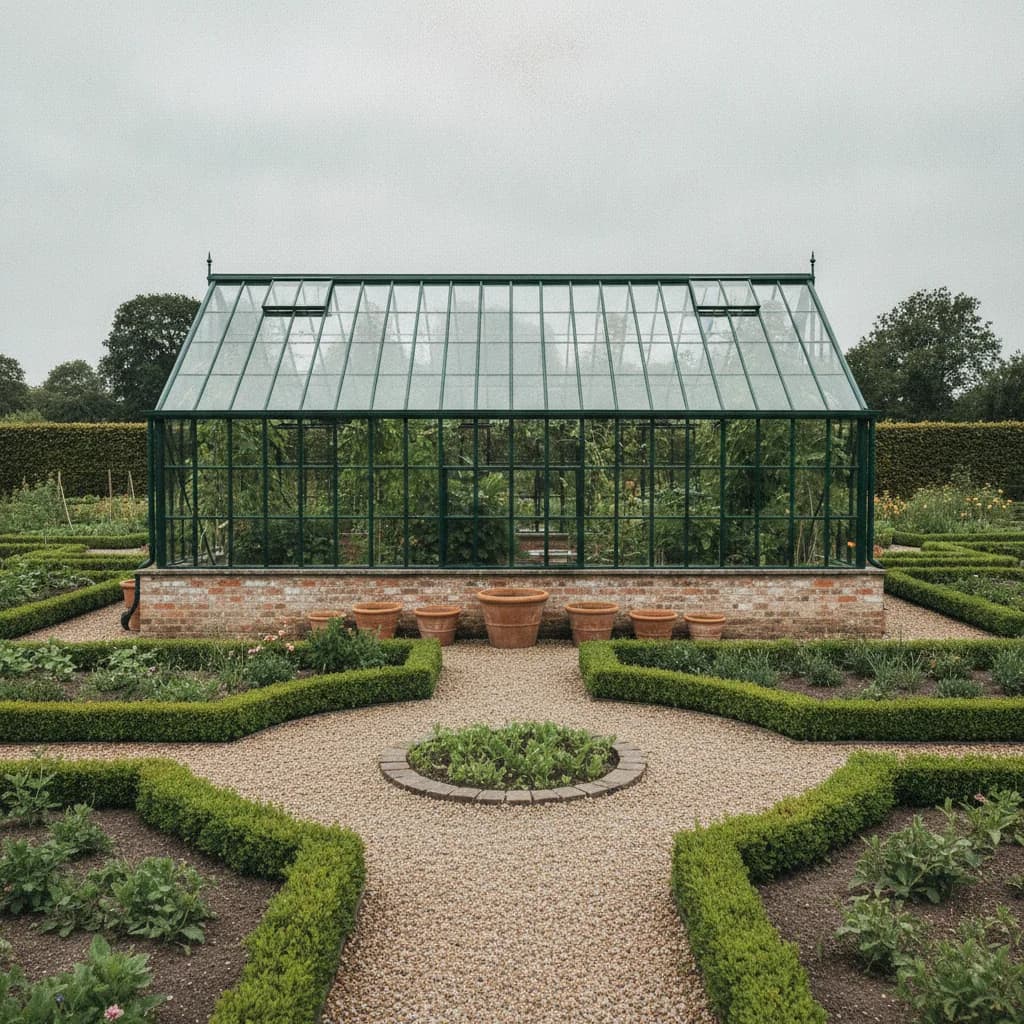
Best Greenhouses 2026: Snow, Wind, Warranty, Parts
Compare what each greenhouse brand leaves out: all-in cost gaps, snow and wind evidence, warranty exclusions, replacement panels, and parts support.
Shortlist
Quick answer: The best greenhouse is the exact model whose completed cost, local-load match, warranty exclusions, and replacement route are clear before the deposit. Canopia's official Glory gallery states that model was tested to 20.5 psf snow load and 62 mph wind. Confirm what those test values mean, the required anchoring, and whether the local authority accepts them. Planta's Sungrow 20 product page and collection now agree on 75 psf snow load; the product page states 65 mph wind when properly anchored. Standard Riga publishes no paired figure. Janssens Royal Victorian has conditional engineer-certified figures, while the Junior does not. Hartley and Alitex buy installed heirloom support, not a universal public weather rating. Ask for the exact model, base detail, rating document, warranty schedule, and delivered replacement-panel price in writing.
Best for
Buyers building a shortlist who want completed cost, weather evidence, warranty exclusions, and the long-term parts route compared before the brand name.
Wrong fit
Buyers who have not priced the full project yet. Start with the real cost guide so the shortlist stays realistic.
Tradeoff
A stronger frame or longer warranty badge is not enough. The useful premium is a model-specific rating, the required base, a warranty that covers the part likely to fail, and a replacement route that still works in year ten.
There is no single best greenhouse, and any list that crowns one is selling you something. The answer splits by price and build type: an heirloom glasshouse you keep for 20 years is a different purchase from a twin-wall polycarbonate kit that finally lasts more than three seasons, and both are the right call for the right buyer. We don't sell greenhouses. We save you from buying the wrong one, so this roundup names the premium tier and the mid-market tier and tells you plainly where each pick falls short.
Before you fall for a photo, know that the kit price is not the project price. The table below uses comparable build subtotals where the source material supports one and says which address-specific lines remain. Price the exact base, anchoring, ventilation, delivery, utilities, labor, and permits in the real cost of a greenhouse. If the glazing decision is still open, settle glass vs polycarbonate first, because it sorts half this list for you. When the shortlist is down to two or three, the full greenhouse buying guide walks the rest of the way to a signed quote.
Quick Answer: Compare the Failure Risk Before the Brand
Greenhouse
Comparable build subtotal
Published snow and wind evidence
Warranty truth
Replacement and support truth
Palram Canopia Glory 8x12
$3,750 to $7,400 DIY at the August 16, 2026 dealer-price spread
Canopia's official Glory gallery states tested to 20.5 psf snow load and 62 mph wind. Confirm the test definition, anchoring conditions, and local acceptance
10 years, prorated from year two, non-transferable, and anchoring is required
Palram Americas handles US parts. Canopia publishes no Glory replacement-panel price or lead time
$5,515 to $7,620 DIY before tax, heat, power, or paid assembly
Product page and collection state 75 psf; product page states 65 mph when properly anchored, checked September 26
Planta advertises 10 years on Sungrow. Get the exact component schedule and exclusions in writing
Planta lists standard polycarbonate sheets and a US warehouse, but the exact fitted replacement SKU, delivered price, and lead time still belong in the quote. The sheet and greenhouse listings were sold out or on backorder on August 31, 2026
$10,500 to $12,800 DIY. No model-specific paid-assembly price was published
The Junior has no published figure. The Royal Victorian VI23 to VI46 certification states 115 to 130 mph and 25 to 30 psf by model, only with the specified continuous foundation, anchors, and braces
Frame and stainless hardware up to 15 years, workmanship up to 10 years, non-transferable. Tempered glass is excluded from day one
Exaco prices vents, openers, louvres, and screens. It does not publish a replacement-pane price
The cost anchors reuse the line-by-line builds in Palram vs Riga vs Janssens and the real cost guide. They are planning builds, not quotes for your address. Current manufacturer product, warranty, and support pages were rechecked on August 31, 2026. Unknown does not mean weak. It means the maker has not published a comparable number that can carry the decision.
Five Stop Gates Before You Call One Greenhouse Stronger
Name the exact model and generation. A family-level claim does not apply automatically to every size. Planta's Sungrow 20 and 26 pages now agree with its collection at 75 psf, but confirm the rating for the ordered revision. Exaco's published Riga figures belong to a reinforced XL, not a standard Riga 3.
Ask what the number is. Ground snow load, roof snow load, design wind speed, wind burst, and a test value are not interchangeable. Put the units, standard, and document date beside the number.
Price the condition that makes the rating valid. Janssens Royal Victorian certification assumes a continuous concrete or solid-grouted masonry perimeter foundation, model-specific anchors, and knee braces. The number without that base is not your number.
Read the warranty as a payment schedule. Palram's ten-year badge becomes a 50 percent buyer contribution in year six and 90 percent in year ten. Riga glazing becomes prorated after year five without a published ladder. Janssens excludes the glass from day one.
Get one replacement in writing. Ask for the current SKU, delivered price, lead time, and fitting instructions for one roof panel or pane. None of Palram, Riga, or Janssens publishes that complete answer today.
That is the cross-brand risk test: local-load match, required base, warranty payment, replacement part, and support path. A longer badge or a heavier-sounding adjective does not pass it.
No maker in this comparison guarantees a published future support period. A parts catalog proves what is available now, not what will be stocked in year ten. Compare standardized flat sheets with proprietary curved panels and custom panes, then require the seller to state the current SKU, delivered price, lead time, fitting method, and expected support horizon in writing. If the answer is only “we carry parts,” long-term availability is still unknown.
The prebuilt and heirloom lanes need the same discipline. Yoderbilt removes assembly but publishes only a two-year stain warranty clearly, not a complete structural and panel schedule or a model-level weather rating. Hartley covers structure and installation for 30 years. Alitex covers the aluminium frame for 25 years or the purchaser's lifetime, whichever is longer, while doors and bonded glazing bars carry five years, paint ten years, and moving parts one year. Neither heirloom maker publishes one universal residential psf and mph pair. The value is direct project service and long-term support. The quote still needs site-specific engineering, exclusions, replacement pricing, and transfer rules.
The Premium Tier: Buy Once, Keep for 20 Years
This is the Delegator's lane. You want a beautiful greenhouse that lasts decades and is done right the first time, and you are pricing a five-figure project, not a kit.
If your real question is not which frame to buy but which company will design, engineer, deliver, and install the project, use six residential greenhouse building companies compared. It separates direct national crews from manufacturers that expect your local contractor to own the base and build.
Hartley Botanic
If you want the heirloom glasshouse, Hartley is the reference point. Hand-built from aluminium in England since 1938, glazed in 4mm toughened safety glass, and backed by a roughly 30-year structural guarantee, it is built to be owned for a generation and it looks the part in a formal garden. Pricing is bespoke and not published, discussed after a brochure and a call, and it climbs with size and glass. The catch: you cannot price it online, lead times are long, and a house this size needs professional assembly and a proper masonry base, which are extra. We assembled the dated figures that do exist in what a Hartley Botanic actually costs. For the buyer who wants the best and plans to keep it, it earns the number. The full head-to-head is in Hartley Botanic vs Alitex.
Alitex
Alitex is the other name at the top, and its National Trust collection is the calling card. Hand-built aluminium in the UK, a frame guarantee defined as 25 years or the purchaser's lifetime, whichever is longer, and a 10-year warranty on standard finishes. Unusually for this tier, the prices are published: the Hidcote starts at £19,500 and the range tops out at £55,600 for the Ickworth as of August 2026, including VAT, delivery, and installation in mainland England and Wales, with the masonry base and interior fittings not included. That is the fit statement and the caveat together: you get an heirloom glasshouse with a real warranty and the maker's own install team, but budget the base and fittings on top. The full price list, the US Kew Collection figures, and the guarantee fine print are in what an Alitex actually costs.
Janssens
Janssens is the reachable step into real glass. The Royal Victorian range gives you 4mm tempered safety glass, which is thicker than the 3mm many kits use, on a substantial aluminium frame with a Victorian look, at roughly $8,000 to $19,000 for the kit depending on size. A $15,000 to $26,000 build subtotal is a useful planning range once the base and assembly are included, but it is not an all-in address-specific price: delivery, tax, site work, utilities, permits, heat, and contingency still need written lines. It is sold as a kit through US retailers, which is the strength (you can price it and buy it today) and the caveat (it is a heavy kit and self-assembly is a genuine multi-day job, or a paid one). For a buyer who wants the glasshouse look and tempered-glass durability without the top-tier bespoke number, it is the lower-cost glass option in the premium lane. The full verdict, including real assembly times and the warranty fine print, is in the Janssens review.
The Mid-Market Tier: Value That Actually Lasts
Not everyone needs a $20,000 glasshouse, and saying so is the point. These are the picks for the step-up buyer who killed a cheap kit already and wants one that lasts, at a fraction of the glass number. They grow the same plants. If you are still weighing whether the premium tier is worth the difference at all, premium vs mid-range greenhouse prices both lanes at the same entry size using the same sourced figures.
Best From $5,000 to $20,000: Exaco Riga
This budget is where generic roundups become least useful. At the bottom, the Exaco Riga 2s starts at $5,999, or $6,823 with its factory base before site work. The Riga 4 is $8,099, or $9,598 with its base. At the top, the 16mm triple-wall Riga XL 6 lists at $18,499, or $20,698 with its base. Standard models use 8mm twin-wall panels with 10mm gables on a curved aluminium frame.
Riga is the thicker-glazing cold-insulation fit in this price band. Treat snow and wind as a separate model-level decision: the standard Riga has no published psf and mph pair, and the 135 mph and 64 psf figures belong to a reinforced XL configuration. Yoderbilt is the better fit if you want a wood structure delivered assembled. Janssens is the better fit if clear tempered glass and the Victorian look matter more than insulation. Palram Glory is the lower-cost route. The Riga's catch is real: the base is extra, assembly needs at least two people, and its warranty excludes extreme-weather damage even when a specific configuration carries a structural rating.
If those three are your shortlist, run them at the same footprint rather than by brand. At roughly 100 square feet, checked August 16, 2026, the comparable DIY build subtotals are $3,750 to $7,400 for a Palram Glory 8x12, $8,800 to $10,800 for an Exaco Riga 3, and $10,500 to $12,800 for a Janssens Junior Victorian 24. Delivery, tax, utilities, permits, heat, contingency, and any paid assembly remain address-specific. The base, vent, warranty and replacement-parts arithmetic behind those numbers is in Palram vs Exaco Riga vs Janssens.
Palram/Canopia
Palram/Canopia is the mid-market default, and for good reason. Twin-wall polycarbonate on an aluminium frame, DIY-friendly, widely stocked, and available in clear-and-diffused configurations. The Glory line uses 10mm twin-wall and carries a 10-year warranty, while the Balance and lighter lines run a 5-year warranty. It insulates far better than single glass and shrugs off hail that would crack a pane. The main weakness: on a poor base or under-anchored, panels can pop out in a real blow, so the base and anchoring are not optional here either. On a proper gravel-and-timber base it outlasts the buyer who thought they needed glass. Full detail in the Palram/Canopia review.
Planta
Planta is the pick when snow or wind killed the cheap-kit idea but Riga pricing is too much. Gen III residential kits were listed from $2,550 to $6,800 when checked August 27, before freight, the base, vents, and assembly. Sigma publishes 55 psf snow and 65 mph wind. Sungrow 20 and 26 now publish 75 psf and 65 mph, matching the collection's snow figure as of September 26. The galvanized steel frame and owner evidence are encouraging. The caveat is the build: many fasteners, careful panel sealing, and a square anchored base. Buy it for structural transparency, not easy assembly.
Yoderbilt
Yoderbilt is the pick when a flat-pack kit feels too flimsy but a five-figure glasshouse is too much. Built in the United States from southern yellow pine with 8mm twin-wall polycarbonate, current prices run from $3,295 to $16,695 and the finished structure arrives assembled. The wood frame is the character and the caveat: it wants stain every two to three years, delivery needs a 9-foot or 13-foot route by width, and buyers should request the structural and panel warranty in writing because it is not clearly published. For a buyer who values a finished US-built structure and direct support, it fits.
Solexx
Solexx is the cold-climate specialist. Its twin-wall covering is polyethylene, not polycarbonate, with one of the higher insulation values on the market (roughly R-2.1 to R-2.3) and fully diffused light that spreads evenly and speeds growth. That makes it a strong pick for the Mountain West and Upper Midwest season-extension buyer fighting cold and big day-night swings. The caveat is exactly that diffusion: you get even light and warmth retention, but no clear view through the walls and a softer look than glass. If insulation matters more than clarity, that is the right trade. More cold-climate picks are in best greenhouses for cold climates. Priced head-to-head at a matched footprint against the mid-market default, that trade is in Palram vs Solexx.
Which One Fits You
Choose premium glass (Hartley, Alitex, Janssens) if you want a greenhouse that lasts 20-plus years, looks the part, and you are budgeting a five-figure project including the base. The head-to-head is Hartley vs Alitex.
Choose mid-market polycarbonate (Palram, Planta, Yoderbilt, Solexx) if your real use is seed-starting, overwintering, and season extension, you will assemble it or hire help, and you would rather keep the difference. Pick Planta when published snow and wind figures matter. Step up to the Exaco Riga when thicker glazing and a more complete cold-climate system justify the price. Start at best polycarbonate greenhouses.
Choose neither if what you actually want is a heated room to work or read in through winter. A greenhouse is built to grow plants, not to be a comfortable four-season room, and it will disappoint you as one. That is an office pod. Weigh it at backyardoffice.guide.
Gabriel Ash is no longer a normal live-catalog recommendation after its April 2026 closure. Buyers considering remaining stock should use the Gabriel Ash cost and closure guide.
Anyone have experience with a brand or a model they'd recommend?
Palram/Canopia is the value default. Planta is the stronger weather-rated DIY choice. Yoderbilt is the delivered-prebuilt choice. Exaco Riga is the cold-climate step up. Janssens is the reachable glass lane. Alitex and Hartley are heirloom projects. Start with completed cost and local weather, then choose the brand.
Are they worth the money?
The durable mid-market options are worth it when the alternative is replacing a cheap kit after two winters. Premium glass is worth it only when looks, project service, and decades of ownership are part of the goal. A Palram, Planta, Yoderbilt, or Riga grows the same plants as an heirloom glasshouse. Pay the premium for the ownership experience you actually want.
Can anyone speak to if they think Hartley is worth the huge cost difference compared to a like sized Janssen brand greenhouse?
Hartley is worth the difference for a buyer who wants a bespoke heirloom glasshouse, professional project delivery, and the formal-garden finish. Janssens is the smarter value for clear tempered glass when you accept a kit or local paid assembly. The crop result does not justify the gap. Design, finish, service, and long-term ownership might.
And finally are there any better, less expensive, general alternative brands you can recommend?
Yes. Palram/Canopia is the credible lower-cost lane. Planta sits above it when published snow and wind figures matter. Yoderbilt can beat a kit plus paid assembly because it arrives built. Better and cheaper are only the same answer after the base, vents, freight, labor, and local weather are counted.
How well is that one able to handle the wind?
Do not accept “strong” as an answer. Planta's Sigma 20 and Sungrow 20 and 26 Gen III pages now publish 65 mph, with proper installation and anchoring required for Sungrow. Other brands and models often publish no directly comparable number or tie it to a specific reinforcement package. Match the exact model rating and anchor detail to the local design wind speed before buying.
Canopia by Palram Glory 8x12, exact model and official gallery specification stating tested to 20.5 psf snow load and 62 mph wind, checked August 31, 2026
These guides are built from manufacturer documentation, public specifications, primary research where health claims matter, and repeated buyer questions that show up in real ownership and installation decisions.
Manufacturer responses can clarify pricing bands, warranty terms, support footprint, or common mistakes. They do not move a page up the shortlist on their own.