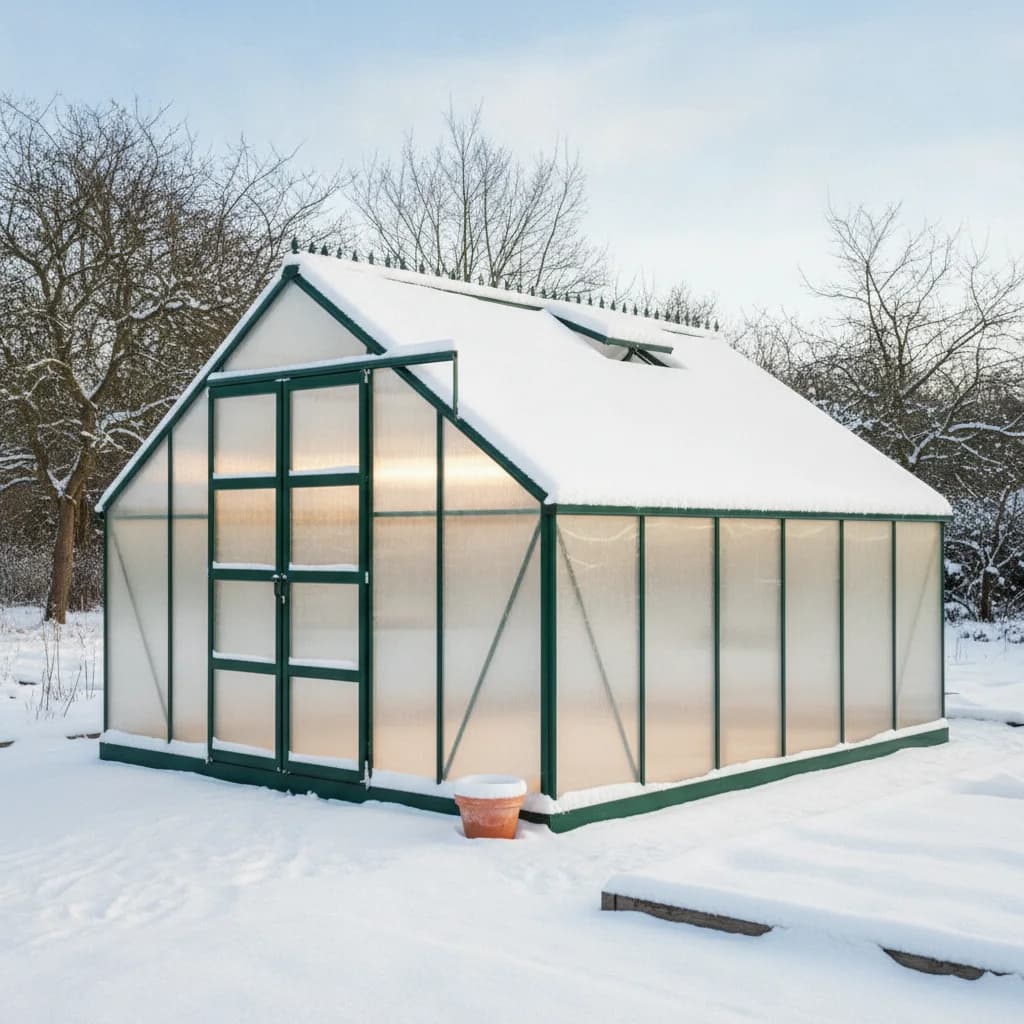
Best Greenhouse for Cold Climates: Rated 2026 Picks
Compare Planta, Riga, Palram, and Solexx by published snow load, wind, glazing, project cost, and the exact rating gaps to settle before buying.
Shortlist
Quick answer: For a cold climate, Planta is the clearest mid-market pick when a published structural number matters: Sigma Gen III states 55 psf snow and 65 mph wind, while Sungrow 20 and 26 Gen III now state 75 psf and 65 mph when properly anchored. The product pages and collection agree as of September 26, 2026; confirm the exact model revision in writing. Exaco Riga is the thicker-glazing step up, but standard models do not publish one simple psf and mph pair. Palram Glory and Solexx remain useful value and insulation choices, but neither maker publishes a comparable model-level wind and snow pair for this shortlist. Match the exact rating to the local design requirement, then price the base, anchoring, ventilation, and heat.
Best for
Season-extension buyers in cold, snowy regions who want insulation, snow-load rating, and heating weighed together, not a generic roundup.
Wrong fit
Mild-climate buyers who never run below frost. Insulation and snow load matter far less for you, so start with the general roundup.
Tradeoff
Better insulation and a stronger roof cost more up front and can reduce light clarity. Lower glazing heat loss may reduce heating demand, but the bill and any payback depend on the whole structure, climate, and set temperature. Match the roof rating to the local load.
In a cold climate the greenhouse that wins is the one that holds heat and carries snow, not the one that looks best in the catalog. That means glazing performance first and snow-load rating second, then the brand. Multi-wall polycarbonate and Solexx twin-wall polyethylene usually lose less conductive heat than single-pane glass, but no material name guarantees a heating-bill percentage. A steep roof sheds wet snow instead of collapsing under it. Get those two right and most of the shortlist falls into place.
We don't sell greenhouses. We save you from buying the wrong one, and in the Mountain West, the Upper Midwest, and the Northeast the wrong one is a pretty single-glass house that bleeds heat all winter and caves under the first heavy snow. This page names the cold-climate picks and the four levers that actually matter: glazing and insulation, twin versus triple-wall, heating, and snow load. Price the running cost alongside it with greenhouse heating cost, and see how far you can stretch the season before you need any of that heat in season extension in a greenhouse.
Every kit with a published snow and wind rating, with the anchoring and heating conditions each maker attaches, is in the best heavy duty greenhouse kits.
135 mph in the documented reinforced configuration
Above the standard Riga lane, package alone was $7,499 when checked
Buyers who need the documented reinforced configuration
Unknown is not a bad rating. It means the maker has not published a comparable number we can put in this table. Do not replace an unknown with a dealer adjective. Every figure was checked against current product or warranty material on August 27, 2026, and still needs to match the exact model, generation, base, anchoring detail, and local design requirement.
Lever 1: Glazing and Insulation Come First
The glazing decides a large share of your winter heating load before the brand does. Alabama Extension publishes U-values of 1.13 for single glass and 0.65 for 8mm twin-wall polycarbonate, about 42 percent less conductive heat loss through the cited twin-wall panel for the same glazed area. That does not mean a 42 percent lower total bill because frames, gaps, wind, and ventilation still matter. In a cold climate the better-insulated default is usually multi-wall polycarbonate or Solexx, not single glass, but compare the exact product U-value on every quote. The full light-versus-insulation tradeoff is in glass vs polycarbonate.
Lever 2: Twin-Wall vs Triple-Wall
Multi-wall polycarbonate is the cold-climate default and the right call for most buyers: lower conductive heat loss than single glass, hail resistance, and a reachable price. Thicker multi-wall can go further, but thickness alone is not a performance specification. Compare the exact U-value, light transmission, warranty, and replacement route. The cost is light and clarity: additional walls usually diffuse more and transmit less light. For seed-starting and overwintering that diffusion is often fine, even helpful. If you want to grow warm crops in a hard winter, a lower-U-value upgrade can earn its price. More on the poly picks in best polycarbonate greenhouses.
Lever 3: Heating That Pencils Out
Better glazing is the first heating decision, before you buy any heater. Alabama Extension lists U-values of 1.13 for single glass and 0.65 for 8mm twin-wall polycarbonate. For the same glazed area and temperature difference, that is about 42% less heat transmitted through the covering, not a 42% lower bill or a guaranteed payback. Air leaks, frames, perimeter losses, local weather, and the target temperature also affect the heater load. From there, plan a thermostatically controlled heater, consider removable insulation for the cold months, and heat only to your real goal: frost-free for most buyers, warm-growing only if you truly want winter tomatoes and have priced it. Heat a propagation bench for seedlings rather than warming the whole airspace. The monthly numbers by size, glazing, and climate are in greenhouse heating cost. One caution: even a well-sealed winter greenhouse overheats on a bright cold afternoon, so keep the auto vents working, per ventilation and overheating.
Lever 4: Snow Load Is a Structural Number, Not a Guess
This is the safety lever, and it is served straight. A flat or shallow roof holds wet snow, and wet snow is heavy, so a cheap low-pitch greenhouse can cave under a load a steeper, rated structure would shed. Roof shape and frame capacity both matter. Ask the local building department for the required roof/design snow load and design wind speed for the site. Ground snow load is an input to the code calculation, not automatically the same number as the load a greenhouse product page publishes.
Before comparing two products, get five answers in the same units:
The exact model and generation on the order.
The rating standard and whether the number is a design value, estimated capacity, or test value.
The base, anchor, exposure, and reinforcement detail required for the rating.
The local roof/design snow load and design wind speed from the building department.
The warranty treatment when installation follows that detail.
If the seller cannot answer, the rating is not usable for the buying decision. The full no-sell guidance is in snow load and wind and anchoring.
Which One Fits Your Winter
Coldest zones, deep winter, want the best insulation? Solexx twin-wall polyethylene or a triple-wall polycarbonate house, on a proper base, anchored, with a thermostatic heater. You trade a clear view for even light and the lowest heat loss on the list, which is the right trade when winter is the whole point.
Value pick that handles a real winter?Palram/Canopia Glory at 10mm twin-wall is the lower-cost pick, insulating far better than glass, hail-resistant, and DIY-friendly, as long as you anchor it and build a base. It grows the same plants as a house costing three times more.
Want a published load number without the Riga price?Planta is the clearest mid-market answer. Sigma Gen III states 55 psf and 65 mph. Sungrow 20 and 26 Gen III product pages and the collection now agree at 75 psf, with the product pages stating 65 mph when properly anchored. The finished structure earns encouraging owner feedback. The catch is a slow, bolt-heavy build and a 6mm shell, so it wins on structural transparency, not on installation speed or maximum insulation.
Hard winters and you want to buy once? The Exaco Riga, built by Hoklartherm, pairs an arched frame with 8mm to 10mm twin-wall panels on the standard line and 16mm triple-wall on the XL. The factory base is extra, assembly needs at least two people, and structural ratings vary by model and reinforcement package. You pay more for the frame and glazing, and in a punishing climate that can be money well spent. The wider field is in best greenhouses.
Actually want a heated room to sit in through winter, not to grow plants? Even the best-insulated greenhouse is built for plants, and heating one to living-room comfort all winter is expensive and still drafty. That is an office pod, an insulated four-season structure, and a different purchase. Weigh it at backyardoffice.guide before you buy the wrong building.
Whichever fits, price the whole project first with the real cost of a greenhouse and size it for your winter with what size greenhouse do I need. In a cold climate the insulation, the snow rating, and the anchoring decide whether the greenhouse survives, long before the brand does.
Frequently Asked Questions
Anyone have experience with a brand or a model they'd recommend?
Planta is the clearest mid-market recommendation when you need published snow and wind figures. Palram Glory is the value pick on a sheltered, properly anchored site. Solexx is the insulation-first choice. Exaco Riga is the thicker-glazing step up. The best recommendation changes with the local load, whether you will heat it, and whether you can manage a long self-build.
How well is that one able to handle the wind?
Ask for a number tied to the exact model. Planta Sigma 20 and Sungrow 20 and 26 Gen III product pages publish 65 mph. Standard Riga, Palram Glory, and Solexx pages do not give one directly comparable manufacturer mph figure for this table. Any rating still depends on the specified base and anchors, site exposure, assembly, and what the number actually represents.
I was wondering if anyone had any personal experiences with the Riga greenhouses by Hoklartherm?
Yes. Owner evidence on Riga is generally positive on the finished structure, insulation, and winter performance. The real buying caveats are a separate factory base, a serious multi-person assembly, warranty exclusions for extreme weather, and the lack of one universal wind/snow pair across standard models. Read the independent Riga review before assuming the strongest XL configuration applies to the smaller kit.
Does anybody have any information regarding the longevity of their poly carbonate panels?
Panel life depends on UV protection, thickness, sealing, and whether replacements remain available. A quality multi-wall panel can serve for a decade or more, but it is still the most likely major component to need replacement before the frame. Ask for the panel warranty separately from the frame warranty, whether it is prorated, and the current delivered price of one replacement panel.
And finally are there any better, less expensive, general alternative brands you can recommend?
Palram/Canopia is the credible less-expensive alternative to Planta when the site is sheltered and the exact higher load is unnecessary. Planta is the better fit when a published model-level number is the purchase reason. A home-built hoop house can cost less again, but it is a different project and usually needs a separate snow and wind design rather than a retail-kit rating.
These guides are built from manufacturer documentation, public specifications, primary research where health claims matter, and repeated buyer questions that show up in real ownership and installation decisions.
Manufacturer responses can clarify pricing bands, warranty terms, support footprint, or common mistakes. They do not move a page up the shortlist on their own.