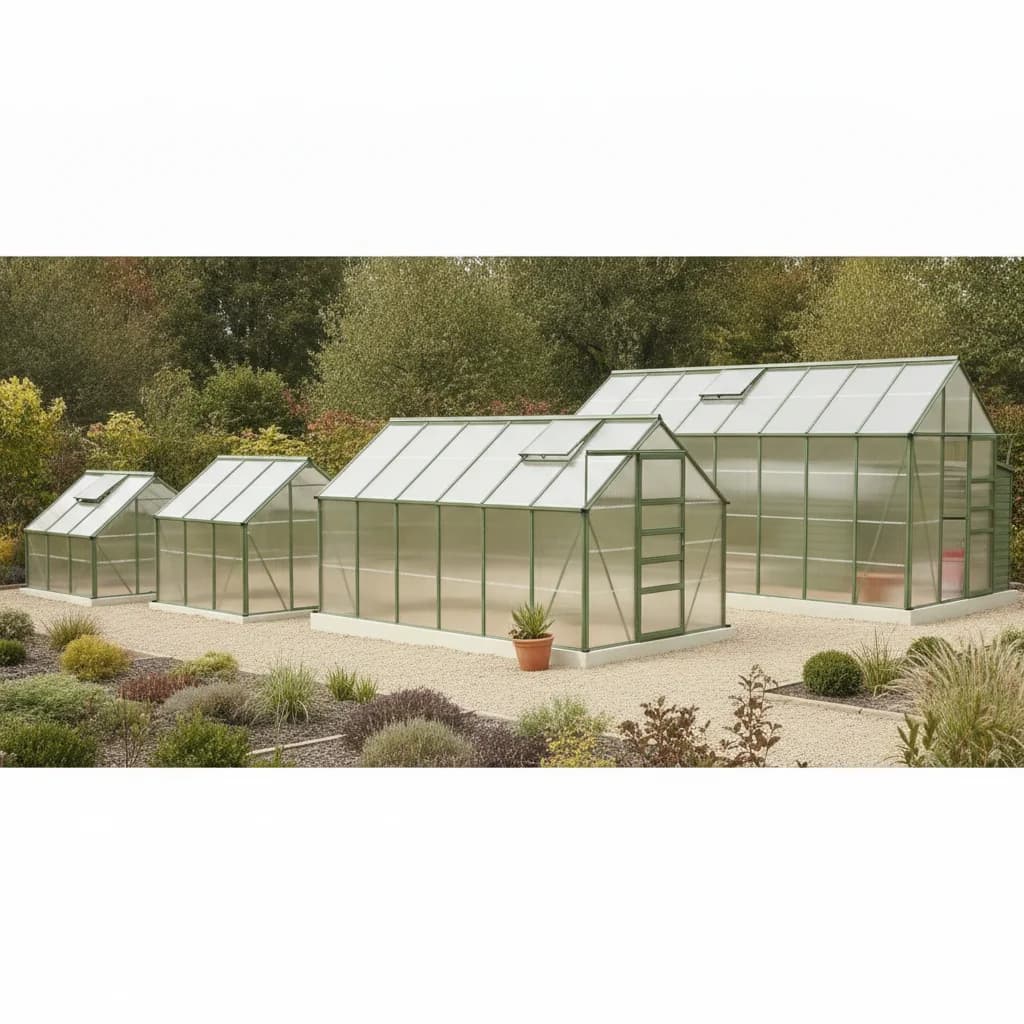
Palram, Planta, Rion, Yoderbilt, and Riga compared by real cost, glazing, weather, and assembly, plus how Solexx polyethylene differs.
Shortlist
Quick answer: The best polycarbonate greenhouses are the mid-market picks that finally last: Palram/Canopia for widely available value, Planta for a galvanized steel kit with published snow and wind figures, Rion for a sheltered-site resin-frame kit at the right price, Yoderbilt for a US-built preassembled structure, and Exaco Riga for the thicker-glazing step up. Solexx belongs in the comparison as a highly diffused twin-wall polyethylene alternative, not as polycarbonate. Planta's Sungrow 20 is a realistic $5,515 to $7,620 DIY project before tax, heat, or power. Standard Riga models use 8mm twin-wall panels with 10mm gables, while only the Riga XL moves to 16mm triple-wall. The tradeoffs across this lane are a cloudy view, eventual panel replacement, and the need for a level, anchored base.
Best for
Step-up buyers who killed a cheap kit and want a polycarbonate greenhouse that lasts, with each pick's weakness named.
Wrong fit
Buyers set on the looks and clarity of a formal glass house. That is a different lane, covered in the premium roundup.
Tradeoff
Polycarbonate buys lower conductive heat loss, hail resistance, and safety. You give up the clear view and a formal look, and the panels yellow over time.
The best polycarbonate greenhouse is the one that grows your plants and survives your climate for a fraction of the glass price, and that is most of the mid-market lane. Multi-wall polycarbonate retains more heat than single glass, spreads light evenly, and shrugs off hail that cracks a pane, which is exactly why the step-up buyer who wants a greenhouse that lasts should start here. Exact U-values vary by panel, so this roundup treats the specification, warranty, and replacement route as part of the product. We don't sell greenhouses. We save you from buying the wrong one, so this roundup names its picks and where each one falls short.
These are kit prices. The kit price is not the project price, so add a base you cannot skip, from the real cost of a greenhouse. If you are still deciding glazing at all, glass vs polycarbonate settles it, and it usually points cold-climate and hail-country buyers straight here.
All figures are illustrative and worth verifying at write time. Real prices move with size, options, and where you buy.
Why Polycarbonate for the Mid-Market
Alabama Extension publishes U-values of 1.13 for single glass and 0.65 for 8mm twin-wall polycarbonate. Lower is better, and those values imply about 42 percent less conductive heat loss through the cited twin-wall panel for the same glazed area. That is not a 42 percent lower total heating bill because frame losses, gaps, wind, and ventilation still matter. Polycarbonate also diffuses light and flexes under impact instead of shattering, so hail and stray branches do not end it. Those properties are why the entire value-that-lasts lane is polycarbonate or polyethylene, not glass. The tradeoff is that polycarbonate yellows slowly under UV over 10 to 15 years, and the panels are the part you eventually replace, though good panels carry UV coatings that slow it. For most growers, that trade is easily worth it.
Palram/Canopia: The Mid-Market Default
Palram/Canopia is where most step-up buyers land, and deservedly. Twin-wall polycarbonate on an aluminium frame, widely stocked, DIY-friendly, and offered across a clear line-up. The Glory is the strong pick: 10mm twin-wall panels, a sturdier frame, and a 10-year warranty. The Balance is the lighter, cheaper line, combining diffused twin-wall roof panels with clearer wall panels, on a 5-year warranty. The hexagonal Oasis works as a decorative feature as much as a growing space.
The fit statement: on a proper gravel-and-timber base, a Palram Glory outlasts the buyer who thought they needed glass, and it grows the same plants for a fifth of the price. The main weakness: the panels are held in channels, and on a poor base or without proper anchoring they can pop out in a real blow, so the base and anchoring are not optional. Do those right and it is one of the best value greenhouses on the market. Full detail in the Palram/Canopia review.
Where Rion Fits
Rion is Canopia's resin-frame lane. The EcoGrow 2 starts at $1,739 and the Grand Gardener 2 at $3,149 before the separate base. It can be a good sheltered-site buy below roughly $4,500. The published Grand Gardener 8 by 12 figures, about 56 mph wind and 15.4 psf snow, make the cutoff clear: this is not the pick for an exposed ridge or heavy-snow site. At the largest sizes, the price reaches heavier aluminium structures and the value case fades.
Planta: The Weather-Rated Steel Middle Lane
Planta is the useful step between a lighter Palram kit and the thicker-glazing Riga tier when snow or wind is driving the purchase. Current Gen III residential kits run from $2,550 to $6,800 before freight, the base, ventilation, tax, and assembly. The Sungrow 20 is $4,250 for the kit and roughly $5,515 to $7,620 as a realistic DIY project before heat or power. The frame is galvanized steel with 6mm double-wall polycarbonate.
The fit statement: choose Planta when a published structural number matters more than easy assembly or thicker glazing. Sigma Gen III states 55 psf snow and 65 mph wind. Sungrow 20 and 26 Gen III product pages and the collection now agree at 75 psf snow load; the product pages state 65 mph when properly anchored, checked September 26, 2026. Get the exact generation, model rating, base detail, and warranty schedule in writing before you pay. The independent Planta review has dated prices, owner evidence, build reality, and the questions to send the seller.
Yoderbilt: US-Built With a Company Behind It
Yoderbilt is the pick when a flat-pack aluminium kit feels too flimsy but a five-figure glasshouse is too much. Built in the United States from southern yellow pine with 8mm twin-wall polycarbonate, Traditional models start at $3,295 after the June 2026 price increase, and there is a real family-owned company behind the sale that answers the phone rather than a dropship listing.
The fit statement: for a buyer who wants something solid, warm-looking, American-made, and delivered fully assembled, Yoderbilt is a genuinely strong choice. The main weaknesses are the wood maintenance, the delivery-access requirement, and the lack of a clearly published structural and panel warranty. Ask for those terms in writing before the deposit. The frame decision is weighed in full in aluminium vs wood frame.
Solexx vs Polycarbonate: The Cold-Climate Tradeoff
Solexx is not polycarbonate. Its twin-wall covering is polyethylene, with one of the higher insulation values on the market (roughly R-2.1 to R-2.3) and fully diffused light that spreads evenly and, by the tests it cites, speeds growth. Polycarbonate is the better fit when you want a clearer wall, a wider choice of rigid kits, or a documented model-level structural rating. Solexx is the better fit when holding heat and spreading light matter more than the view. For the Mountain West, the Upper Midwest, and anywhere with big day-night swings and hard winters, that insulation is the point.
The fit statement: if holding heat and even light matter more than seeing through the walls, Solexx is a strong, purpose-built choice. The main weakness is exactly that diffusion, the walls are cloudy, you get no clear view out, and the look is softer than glass or clear polycarbonate. For a working season-extension greenhouse, most buyers happily take that trade. More cold-climate picks are in best greenhouses for cold climates. For the full price, warranty, and weather-rating breakdown against the mid-market default, see Palram vs Solexx.
Where to Step Up: Exaco Riga
If you want a stronger cold-climate structure, the Exaco Riga is the real step up. The standard models use 8mm twin-wall panels with 10mm twin-wall gables on a curved aluminium frame. The larger Riga XL moves to 16mm triple-wall for more insulation. Official 2026 kit prices start at $5,999, the factory base is extra, and the build needs at least two people. For a buyer in a hard winter climate who values insulation and structure over a clear view, this is the tier to inspect.
Which One Fits You
Choose Palram/Canopia if you want the widely available, DIY-friendly mid-market default at the best price, and you will build a proper base and anchor it. The Glory for 10mm and a 10-year warranty, the Balance to save money. See the full review.
Choose Planta if you need a galvanized steel frame and a model-level snow or wind figure at mid-market money, and you can handle a long bolt-heavy build. Confirm the exact rating and warranty terms for the generation being delivered.
Choose Yoderbilt if you want a solid, US-built, wood-framed house delivered assembled and do not mind periodic staining or measuring the access route first.
Choose Solexx if diffused light and insulation matter most at mid-market money. Choose the Exaco Riga if you also want a heavier arched structure and can fund the separate base and serious assembly.
Whichever you pick, the base and anchoring decide whether it lasts, so pair this with the foundation and base guide. And if what you really want is a heated room to work in year round, that is an office pod, not a greenhouse, weighed at backyardoffice.guide. See the wider field in best greenhouses.
Frequently Asked Questions
Is a polycarbonate greenhouse as good as glass?
For growing, often better, and for a lot less money. Multi-wall polycarbonate retains more heat, diffuses light evenly to reduce scorch, and resists hail that would crack a pane. In Alabama Extension's published comparison, 8mm twin-wall has about 42 percent lower conductive heat loss through the glazing than single glass, but exact panels vary and the total bill includes more than glazing. What glass gives you is crystal clarity, a formal heirloom look, and a panel that does not yellow. If your goal is growing plants rather than a showpiece, a good polycarbonate greenhouse is often the smarter buy.
How long do polycarbonate greenhouse panels last?
Roughly 10 to 15 years before UV yellowing and clouding mean the panels are worth replacing, though the frame lasts much longer and good panels carry UV coatings that slow the fade. That is the main long-term cost of polycarbonate, a possible re-glazing down the line, versus glass which does not yellow. On a quality kit with a proper base, you get well over a decade of service before that matters.
Which polycarbonate greenhouse is best for a cold climate?
Look at insulation and structure together. Planta publishes model-level snow and wind figures on a galvanized steel frame, but uses thinner 6mm glazing and needs a written rating confirmation because its current Sungrow pages conflict. Solexx twin-wall polyethylene prioritizes insulation and fully diffused light. The standard Exaco Riga uses 8mm to 10mm twin-wall glazing on a curved aluminium frame, while the larger Riga XL steps up to 16mm triple-wall. A curved or steep roof also sheds snow. For the Mountain West and Upper Midwest season-extension buyer, insulation matters more than clarity, covered in best greenhouses for cold climates.
Do polycarbonate panels blow off in high wind?
They can, if the greenhouse is poorly based or under-anchored. The panels sit in channels in the frame, and a house on unlevel ground or without proper anchoring gives the wind a way to lift and pop them. This is not a reason to avoid polycarbonate, it is a reason to build a level base and anchor the structure properly, which is cheap compared to replacing panels. The straight guidance is in wind and anchoring.
Is Palram or Yoderbilt the better polycarbonate greenhouse?
Both are credible, with different strengths. Palram/Canopia is aluminium-framed, widely available, DIY-friendly, and cheaper to get into, with the Glory at 10mm and a 10-year warranty. Yoderbilt is US-built from southern yellow pine with 8mm twin-wall poly and a real company behind it, warmer looking but wanting maintenance and a build-to-order wait. Pick Palram for price and availability, Yoderbilt for a solid wood-framed house and hands-on support.
What thickness of polycarbonate should I get?
Thicker insulates more. Basic single-wall poly (found on cheap kits) is the weakest and yellows fastest, avoid it for anything you want to keep. Twin-wall 6mm to 10mm (Palram Glory is 10mm, Yoderbilt is 8mm) is the mid-market sweet spot, good insulation and impact resistance at a reasonable price. Triple-wall and 16mm multi-wall go higher for cold climates at more cost and more diffusion. For most buyers, 8mm to 10mm twin-wall is the right balance.
These guides are built from manufacturer documentation, public specifications, primary research where health claims matter, and repeated buyer questions that show up in real ownership and installation decisions.
Manufacturer responses can clarify pricing bands, warranty terms, support footprint, or common mistakes. They do not move a page up the shortlist on their own.