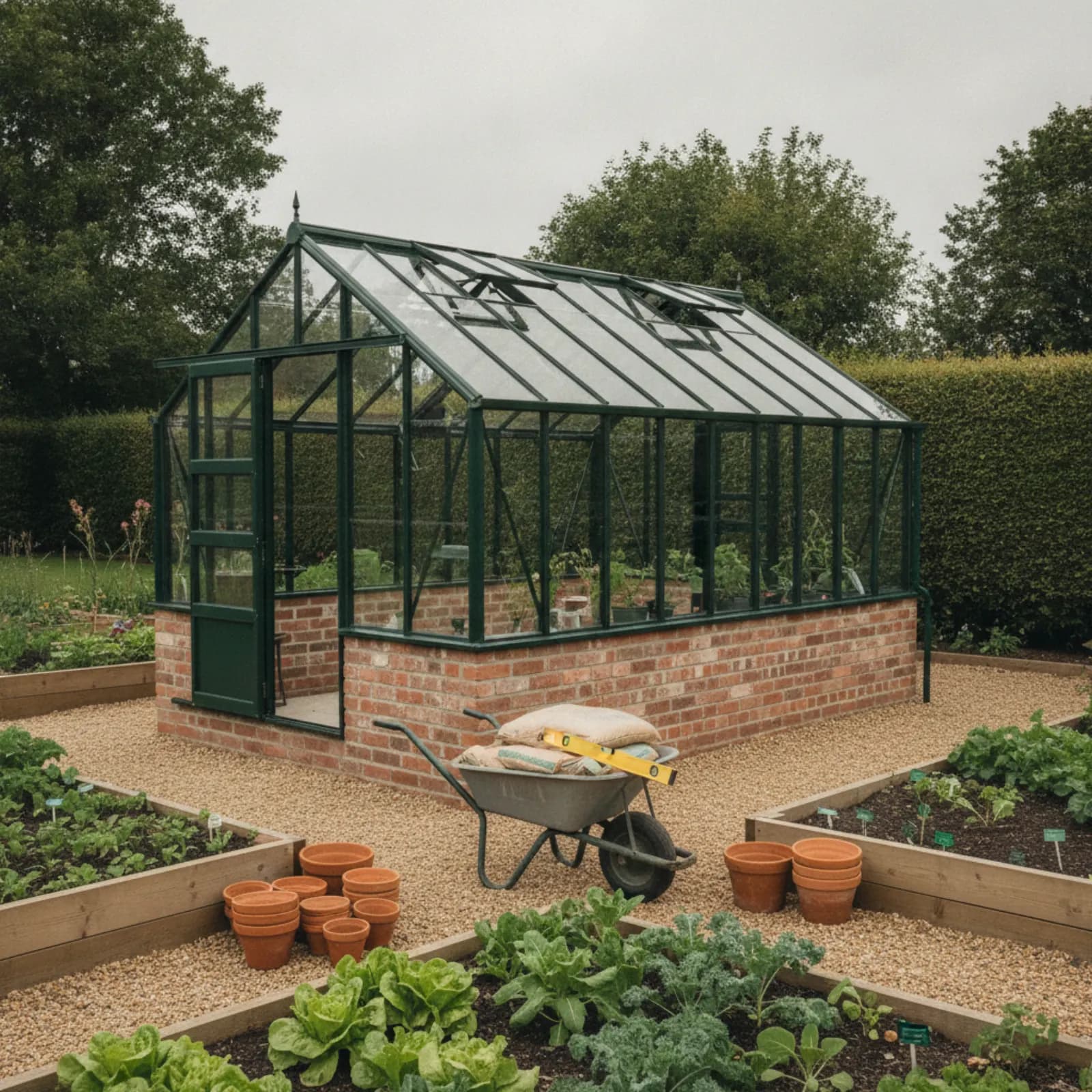
The complete greenhouse buying guide. Real 2026 project costs, glass vs polycarbonate, sizing, base and anchoring, permits, and when to walk away.
Final Decision
Quick answer: Decide the project before the product. A premium glasshouse is an $8,000 to $40,000 structure that becomes a $12,000 to $50,000 project once the base, anchoring, vents, and utility runs are in. A mid-market polycarbonate house lands at $2,200 to $9,000 all-in and grows the same plants. Choose glazing for your climate, size up one step, budget the base and anchoring like they matter, because they decide whether the greenhouse lasts, and check permits before you order, not after.
Best for
Buyers who want the whole greenhouse decision in one place before they order or request a quote.
Wrong fit
Owners who already bought and need setup help. The base, ventilation, and heating guides go deeper on each.
Tradeoff
Glass buys looks, light, and decades of life at several times the price. Polycarbonate buys insulation, hail resistance, and thousands back, at the cost of the view and some resale pride.
The greenhouse in the catalog photo costs $8,000. The greenhouse in your yard, standing level, anchored against wind, vented so it does not cook your plants in July, with power and water reaching it, costs $12,000 to $18,000. That gap is where almost every buying mistake lives, and the brochure never mentions it.
Most people research this backward. They fall for a structure, then discover the base, the permit, and the ventilation after the deposit. This guide runs the decision in the right order, from budget to signed quote. We don't sell greenhouses. We save you from buying the wrong one.
If you keep one rule from this page, keep this one: the kit price is not the project price.
Set the project budget. Structure plus base, anchoring, vents, utilities.
Pick the glazing. Glass or polycarbonate decides cost, light, and safety.
Size it for how you garden. Then go up one step, and stop.
Handle the site. Base, anchoring, ventilation, and the permit check.
Build the shortlist. Only now do brands matter.
Ask the pre-signing questions. Then buy, or walk away.
Each step kills wrong options before you get attached to them. That is the point.
1. Set the project budget, not the kit budget
The structure is a fraction of the finished project. Price the whole thing before a catalog photo narrows your thinking.
Lane
Kit sticker
Real all-in
Premium glass (8x12+ glasshouse)
$8,000-$40,000+
$12,000-$50,000+
Mid polycarbonate (Palram, Yoderbilt, Solexx)
$1,500-$6,000
$2,200-$9,000
Cheap flat-pack kit
$200-$2,000
often replaced in 2-3 seasons
Five lines move the number, and every one is a known regret when skipped:
The base, $500 to $5,000-plus. Gravel-and-timber, a concrete slab, or a masonry dwarf wall. The single most under-budgeted line in the project, and the thing that decides whether the frame stays square. The foundation and base guide tells you which one your greenhouse needs.
Anchoring. An unanchored greenhouse is a kite. Cheap to do, catastrophic to skip.
Ventilation. Automatic vent openers and enough vent area are a real line item, not an accessory.
Utilities. A trench, a circuit, a water line. Thousands, if you want them.
Assembly labor. A big glasshouse is not a weekend DIY job. Professional assembly runs into the thousands.
The line-by-line math, including a worked example where an $8,600 plan becomes a $17,500 project, is in the real cost of a greenhouse. Once the structure, base, and safety work are settled, the greenhouse accessories hub ranks the useful add-ons by purchase order, compatibility, and hidden cost. Run a general project through the size and cost calculator. If you are considering an installed glasshouse, build the Premium Greenhouse Project Brief before you request a single quote. It separates the structure budget from the all-in budget and gives every local line an owner.
2. Glass or polycarbonate, in plain terms
This one choice moves your budget, your light, and your maintenance more than any brand decision. The core tradeoff fits in one paragraph.
Tempered glass gives you the view, the crisp light, and a panel that does not yellow. It costs several times more, it is heavier, it needs a better base, and hail is a real enemy in some regions. Multi-wall polycarbonate retains more heat, shrugs off hail, diffuses light in a way plants genuinely like, and costs a fraction. Alabama Extension's published values for single glass and 8mm twin-wall polycarbonate imply about 42 percent less conductive heat loss through the cited polycarbonate panel, not a 42 percent lower total heating bill. Its failure mode is quality: cheap single-wall poly yellows and goes brittle in two or three seasons, which is the entire cheap-kit trap. Good multi-wall from a serious maker lasts 10 to 15 years.
Buy glass because you want glass, for the looks and the light, and you are paying for decades. Buy quality polycarbonate because it is the practical answer for growing, especially in hail and cold. Both are right for different buyers. The full comparison, including safety glazing and what cheap kits actually ship, is in glass vs polycarbonate. The frame question, aluminium or wood, matters less than the glazing and is mostly a looks-and-maintenance call.
3. Size it for how you garden, then go up one step
Every owner survey says the same thing: the top regret is buying too small. Staging, pots, a path you can actually walk, and a chair you did not plan for eat the floor faster than anyone expects. So the standard advice is right: buy one size bigger than you think you need.
Then stop, because bigger is not free. A larger house costs more to heat every winter and is harder to keep cool in summer. The break-even depends on your climate and glazing, and the math lives in what size greenhouse do I need with the running costs in greenhouse heating cost. An 8x12 is the sweet spot for most serious hobby gardeners: room for staging on both sides, a real path, and a heating bill that does not sting.
4. Handle the site before brand research
Most catastrophic greenhouse failures are site failures, not product failures. Four checks, in order:
The base. Level, drained, square. Gravel-and-timber at $1 to $3 per square foot in materials suits most mid-market kits. A slab at $3 to $6 per square foot suits heavy glass and soft ground. Sloped or wet ground adds real cost before the first pane goes up.
Anchoring for wind. This is the life-of-the-structure item. Base fixings into a slab, ground anchors into a gravel perimeter, done per the manufacturer's engineering. Read wind and anchoring before you finalize the base. If you get real winters, read snow load too. Those pages sell nothing. They are served straight.
Ventilation. Overheating kills more plants than cold. Aim for total vent area around 15 to 20 percent of floor area and fit wax-cylinder automatic openers, which work on temperature with no electricity, from about $50 each. On any greenhouse you are not standing next to at 11am in July, auto vents are what keep the plants alive. The failure mode and the fix are in ventilation and overheating.
The permit check. Under the International Residential Code, a one-story detached accessory structure of 200 square feet or less is exempt from a building permit, but many jurisdictions set the line at 120 square feet, and slabs, electricity, height, setbacks, and HOA rules can all trigger requirements anyway. An 8x12 is 96 square feet, which is why so many hobby greenhouses sail through, and a 10x24 is not. Check before you order, because a setback problem found after delivery stops the whole project. Start with do I need a permit.
5. Build the shortlist by lane
With budget, glazing, size, and site requirements clear, the shortlist nearly builds itself.
Buyer
Start with
Realistic 2026 price
Heirloom glass, bought once
Hartley Botanic, Alitex
Quote-only bespoke; Alitex Kew from $60,000 installed, Hartley priced per project, multi-decade guarantees
Real glass, reachable price
Janssens
$8,000-$19,000 for the Victorians by size, popular 10 by 15 VI34 about $11,500
Value that lasts, DIY-friendly
Palram/Canopia
$1,500-$6,000 (a Glory 8x12 runs about $3,100 to $5,200 depending on retailer)
$3,295-$16,695, ask for the structural and panel warranty in writing
Twin-wall workhorse
Solexx, Exaco/Riga
Solexx from $2,114; Riga glass-hybrid $5,999-$22,999
Prices move with promo cycles and freight, so verify on the maker's own site the week you buy. The current verdicts live in best greenhouses, the mid lane deep-dive in best polycarbonate greenhouses, and the full field with strengths and weaknesses named is in the brand directory.
One warning that saves the most money: the Amazon and Wayfair flat-pack lane, the $300 to $1,500 aluminium-and-poly kits, follows one pattern. Thin glazing that yellows, frames that rack in wind, anchoring that amounts to four tent stakes. Some survive in sheltered corners. Most become a story about the one that blew away. If that is the budget, a quality cold frame or a hoop tunnel is the better buy, and we say so plainly.
What everyone gets wrong
The five mistakes below cover most of the regret reports owners post. All of them are designed out before purchase or expensive to fix after. The long version is in greenhouse buying regrets.
Buying too small. The one regret nearly every owner shares. Go up one step.
Cheap single-wall glazing. Yellowed, brittle, replaced by season three. Twin-wall or real glass, nothing between.
The base as an afterthought. Set on dirt or patio slabs, the frame racks, the door jams, the panels crack.
No anchoring. The most common catastrophic failure, and the cheapest to prevent.
No automatic vents. One hot Saturday away from home cooks a full bench of seedlings.
What to ask before you sign
Send these to the seller in writing. Credible makers answer all seven without flinching.
What wind speed and snow load is this structure rated for, and where is that documented?
What base do you require for the warranty to hold, and can I see the base spec before I order?
Is anchoring hardware included, and is it engineered for my base type or sold separately?
What is the total vent area as a percentage of floor area, and are automatic openers included or extra?
What exactly does delivery include, and who gets the crates from the curb to the back yard?
What does professional assembly cost, and who is liable for glass broken during it?
What does the guarantee actually cover: frame, glazing, seals, and for how long each?
The full 21-line version, including deposit terms, freight liability, and the warranty schedule by component, is in what a complete greenhouse quote should include. If you already have a quote and want an independent set of eyes on it, our free quote review exists for exactly this moment.
If you are comparing builders rather than boxed models, start with six residential greenhouse building companies. The page separates companies with their own national installation crews from manufacturers that coordinate with your local contractor.
When to walk away
Walk away, or at least pause the order, when:
The seller cannot produce wind and snow ratings. If it is not documented, it is not rated.
The quote has no base spec and no anchoring line. That quote is for a structure, not a greenhouse that stays put.
The glazing is unbranded single-wall poly and the warranty is shorter than the shipping time.
The discount expires tonight. Greenhouse promo cycles repeat. Urgency is a sales tool, not a deadline.
Your municipality or HOA has not cleared the location. A permit problem after delivery is the most expensive kind.
What you actually want is a heated room to work or read in year-round. That is an office pod, not a greenhouse, and we would rather point you to backyardoffice.guide than sell you the wrong structure.
Walking away from a bad quote is not losing a season. A cold frame or a hoop tunnel and a flat of seedlings will hold you over while the right project comes together.
Frequently Asked Questions
What does a greenhouse actually cost once the base is in?
A premium glasshouse quoted at $8,000 typically finishes at $12,000 to $18,000 once the base ($500 to $5,000), site prep, anchoring, automatic vents, and power and water runs are counted, and large bespoke projects clear $50,000. A mid-market polycarbonate house lands at $2,200 to $9,000 all-in. The kit price is not the project price, and the base is the line most quotes hide.
Is an expensive glass greenhouse actually better than a polycarbonate one?
Better at being beautiful and staying clear for decades, not better at growing. Multi-wall polycarbonate retains more heat, resists hail, and diffuses light in a way plants like. For one published benchmark, 8mm twin-wall has about 42 percent lower conductive heat loss through the glazing than single glass. That is not the same as a 42 percent lower total heating bill. Glass wins on looks, light clarity, and panel lifespan, and it costs several times more with a heavier base requirement. A $3,000 Palram on a proper base grows the same tomatoes as a $25,000 glasshouse. Pay for glass because you want glass.
What size greenhouse should I buy?
One step bigger than your plan, then stop. Running out of space is the most common owner regret, so an 8x12 beats the 6x8 most people start with, with room for staging on both sides and a path. But oversizing costs real money every winter in heat, so bigger is not automatically better. Size to how you will garden in year three, not to the catalog photo.
Do I need a permit for a backyard greenhouse?
Often not, sometimes yes, and you must check before ordering. The IRC exempts one-story detached accessory structures of 200 square feet or less, but many local codes cut that to 120, and a slab foundation, electrical run, height limits, setback lines, or an HOA can each trigger review on their own. An 8x12 at 96 square feet clears most thresholds. The check costs a phone call. Skipping it can cost the project.
What is the single most important thing to get right?
The base and anchoring, together. A level, drained, square base keeps the frame true so doors close and panels do not crack, and proper anchoring is what keeps the structure yours in the first real storm. Owners almost never regret the brand. They regret what was under it and what was holding it down.
These guides are built from manufacturer documentation, public specifications, primary research where health claims matter, and repeated buyer questions that show up in real ownership and installation decisions.
Manufacturer responses can clarify pricing bands, warranty terms, support footprint, or common mistakes. They do not move a page up the shortlist on their own.