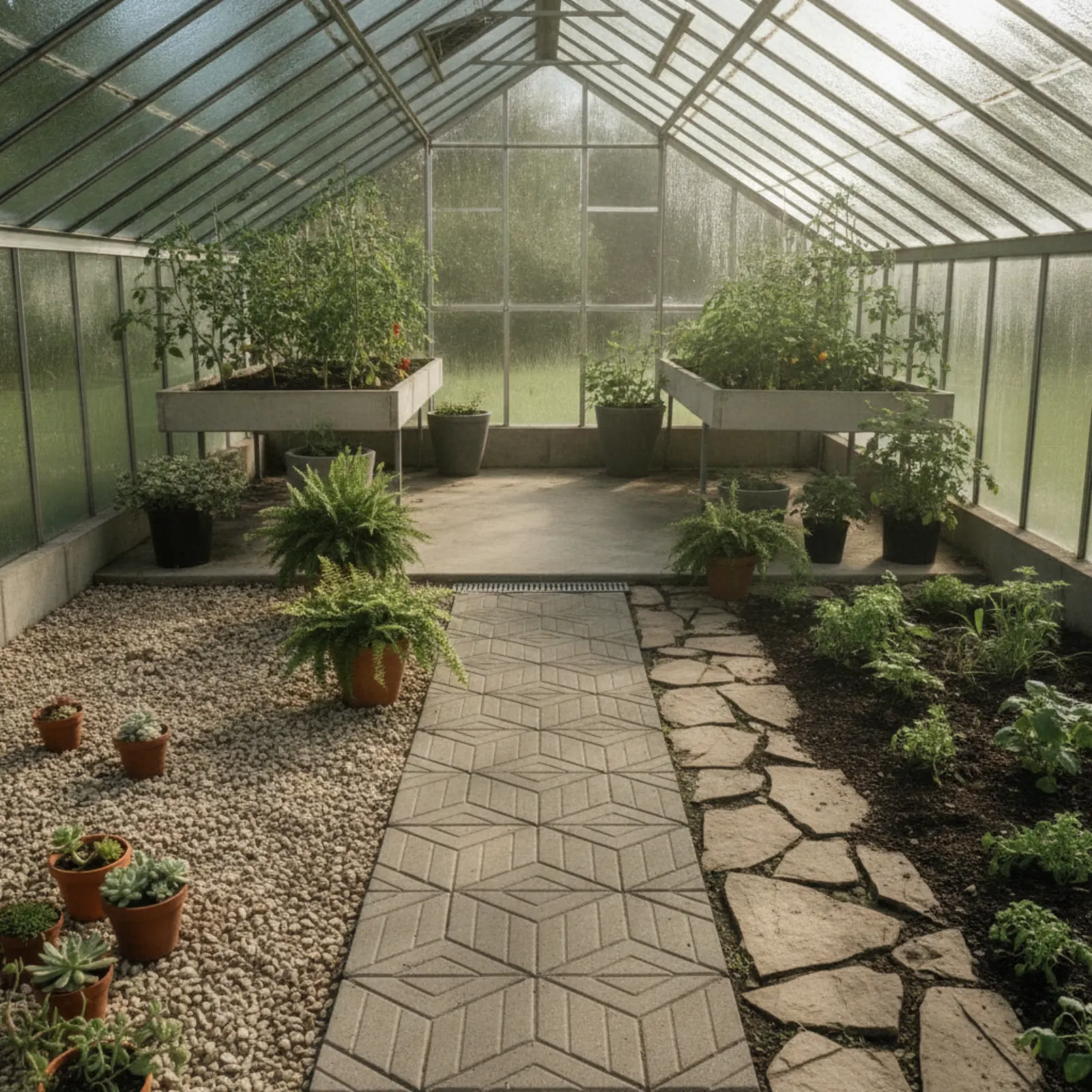
Greenhouse Guide
Greenhouse Flooring and Drainage: Gravel to Slab
Greenhouse flooring options compared by drainage, cost, cleaning, weeds, accessibility, heat, humidity, and long-term maintenance.
Quick answer: The best greenhouse floor depends on drainage and use. Gravel is practical and forgiving. Pavers look cleaner. Concrete is easiest to roll and clean but needs drainage planning. Bare soil is rarely the lowest-maintenance path.
Best for
Buyers deciding the base and floor before ordering a backyard greenhouse.
Wrong fit
Commercial greenhouse operators needing engineered slab and drainage design.
Tradeoff
A prettier floor can be worse if it traps water. Drainage beats catalog looks.
Methodology
These guides are built from manufacturer documentation, public specifications, primary research where health claims matter, and repeated buyer questions that show up in real ownership and installation decisions.
Manufacturer responses can clarify pricing bands, warranty terms, support footprint, or common mistakes. They do not move a page up the shortlist on their own.
Next Step
What to do next
Use one of these three paths. They are here to move the decision forward, not add more noise.
Just starting your greenhouse research?
Already got a quote? Get a free read on it
Related Guides
Greenhouse • Buying Guide
Greenhouse Buying Guide 2026: Costs and Mistakes
The complete greenhouse buying guide. Real 2026 project costs, glass vs polycarbonate, sizing, base and anchoring, permits, and when to walk away.
Greenhouse • Foundation
Greenhouse Foundation and Base Guide (2026)
Gravel-and-timber, concrete slab, or brick dwarf wall? The base runs $500 to $5,000 and decides whether the greenhouse lasts. The full cost breakdown.
Greenhouse • Safety
Greenhouse Anchoring: Why Greenhouses Blow Apart
An unanchored greenhouse is a kite. How wind failure happens, what ASCE 7 wind loads mean, and how base fixings and ground anchors keep it up.