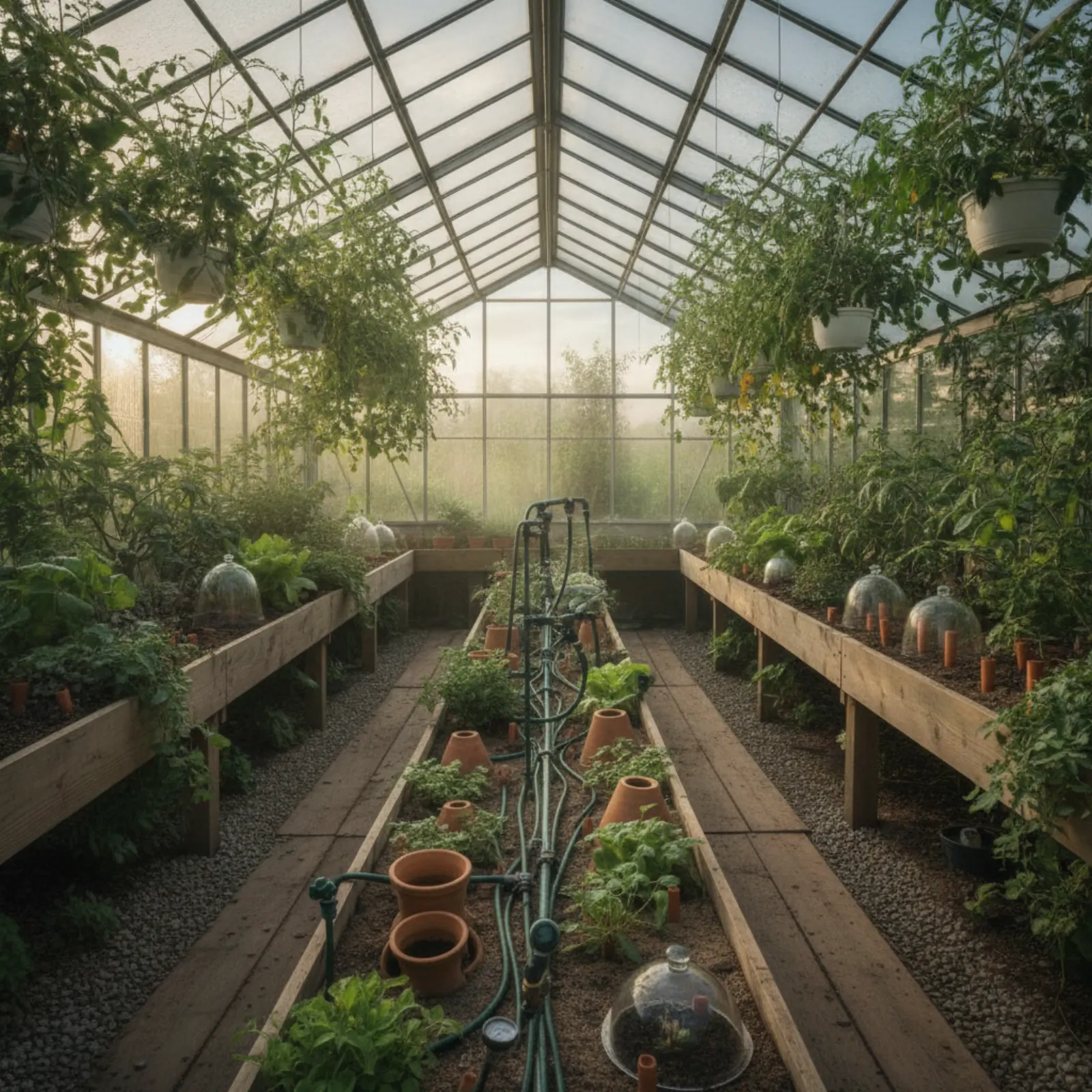
Compare greenhouse irrigation systems by current cost, labor, layout, pressure, drainage, crop grouping, timer risk, and winter shutdown.
Installation
Quick answer: Hand watering costs nothing if you already own the hose, but it costs daily time. A current greenhouse drip kit runs $134.99 for four rows, $148.99 for six, and $165.99 for nine. A timer, filter, regulator, drainage, and winter shutdown can still sit outside the box.
Best for
Buyers planning a backyard greenhouse for seedlings, vegetables, citrus, or overwintering plants.
Wrong fit
Commercial growers needing engineered fertigation or crop-production design.
Tradeoff
Hand watering is flexible and cheap. Drip and timers reduce daily labor but require layout, pressure, drainage, and maintenance.
The greenhouse kit price does not include your daily watering habit.
That matters because water is where many pretty backyard greenhouses become chores.
Quick Answer
Plan irrigation before you fill the greenhouse. Hand watering is fine for small, mixed plant collections. Drip lines and timers make sense when you grow similar crops, travel, or want predictable watering. In every case, drainage and ventilation have to match the water plan.
On a private well, start with the source rather than the timer. The network's private-well water guide explains what to test, and the well-pump generator guide covers the separate outage question if irrigation cannot pause safely.
Watering options and the real cost
Option
Current equipment line
Best fit
Watch for
Hand watering
$0 if hose and wand are already owned
Small, mixed greenhouse
Daily time and uneven watering
Four-row drip kit
$134.99
Beds, benches, similar crops
Clogs, layout, pressure
Six-row drip kit
$148.99
A fuller 8 x 12-style layout
Same schedule rarely fits every crop
Nine-row drip kit
$165.99
Larger or denser row layouts
More emitters to inspect and flush
Timer plus drip
Kit price plus timer and any filter or regulator
Routine crops and travel
Overwatering if weather changes or an emitter fails
Capillary mats
Price separately for the bench area
Seedlings and benches
Sanitation and algae
Misting
Price only after nozzle count, pressure, and drainage are known
Propagation and cooling in the right climate
Disease pressure if overused
The three drip prices are Bootstrap Farmer's published US prices checked September 1, 2026. They are a current product example, not a claim that every four-row greenhouse system costs $134.99. The kit connects to a garden hose or faucet and places emitters at 12-inch intervals. The product profile states what is included, what may still be missing, and who should skip it.
The buyer rule is simple: price the complete water path. Source, pressure, filter, regulator, main line, emitters, timer, drainage, and winter shutoff are one system. The product box may contain only the middle.
Group plants by water need
The mistake is putting seedlings, citrus, herbs, tomatoes, and overwintered tropicals into one watering schedule. They do not want the same frequency or soil moisture.
Before buying irrigation hardware, decide what the greenhouse is for. A seed-starting greenhouse and a citrus winter greenhouse are different projects.
Drainage is part of irrigation
Water has to go somewhere. Gravel floors, trench drains, sloped slabs, and raised benches all change maintenance. A greenhouse with no drainage plan becomes muddy, humid, and harder to clean. Sort this out alongside the flooring and drainage guide before you commit to a floor.
If you choose a concrete floor, plan where water exits. If you choose gravel, plan weed fabric, depth, edge containment, and hose access.
Automation helps, but it can fail quietly
A timer can save a weekend away. It can also keep watering during a cool cloudy spell, clog without warning, or fail when batteries die. Automation reduces labor. It does not remove inspection.
The best system is one you can check quickly.
In a freezing climate, drain or isolate exposed lines before winter. A cracked fitting or split hose is a spring leak waiting to happen. If the greenhouse stays heated, the line between the house and greenhouse still crosses colder ground and air, so the shutoff plan belongs in the installation scope.
Frequently Asked Questions
Do I need drip irrigation in a small greenhouse?
Not always. For a small mixed collection, hand watering may be better because you can adjust plant by plant.
Can I use a hose only?
Yes, but plan storage, drainage, and winter shutoff if freezing is possible.
These guides are built from manufacturer documentation, public specifications, primary research where health claims matter, and repeated buyer questions that show up in real ownership and installation decisions.
Manufacturer responses can clarify pricing bands, warranty terms, support footprint, or common mistakes. They do not move a page up the shortlist on their own.