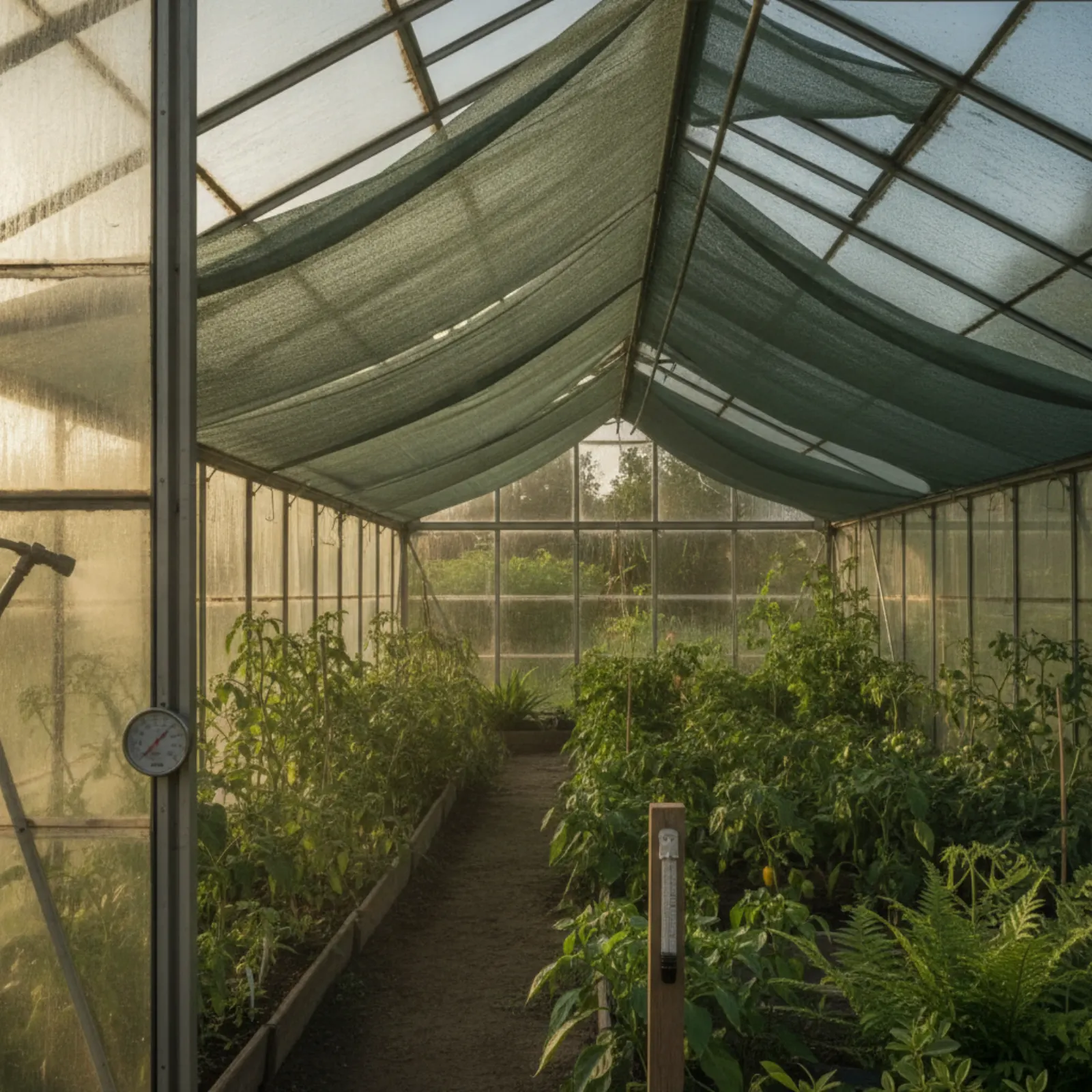
How to use greenhouse shade cloth without guessing: heat buildup, glazing, ventilation, crop needs, timing, and why shade is not a substitute for vents.
Installation
Quick answer: Shade cloth helps when the greenhouse is overheating, but it does not replace vents, airflow, watering, or good siting. For a roof close to 10x12 feet, dated grommeted-panel prices checked September 5, 2026 run about $0.52 to $0.55 per square foot, $62.95 to $74.95 for the whole panel, depending on shade percentage, plus $5 to $17 for the clips, grommets, or hooks that hang it. Treat shade as one part of the summer-control plan, not a standalone fix.
Best for
Backyard greenhouse buyers planning for summer heat before they choose glazing and vents.
Shade lowers heat and light stress, but too much shade can slow growth and hide a ventilation problem.
A greenhouse is easy to sell in spring and easy to overheat in July.
Shade cloth is not a decorative accessory. It is part of the climate plan.
Quick Answer
Use shade cloth when the greenhouse regularly overheats even with vents and doors managed correctly. Start with ventilation first, then add shade based on crop needs, climate, glazing, and sun exposure.
What shade cloth solves
Problem
Shade helps?
Still needed
Too much direct sun
Yes
Crop-specific light decisions
Midday overheating
Sometimes
Roof vents, side vents, airflow
Leaf scorch
Often
Watering and hardening-off plan
Poor ventilation
No
More vent area or fans
Bad siting
Partly
The site problem remains
Ventilation comes first
If the greenhouse has no roof vents, small side vents, and no way to move hot air, shade cloth is only a bandage. Hot air still needs to leave. Start with the ventilation and overheating guide, and consider automatic vent openers so vents open when you are not home.
A good summer setup uses roof vents, side vents, open doors when safe, fans if needed, and shade as a support tool.
Do not buy by percentage alone
Shade cloth percentages are useful, but crop and climate matter. Seedlings, lettuce, tomatoes, citrus, orchids, and overwintered pots do not want the same summer light. A buyer in Maine and a buyer in Arizona are not solving the same greenhouse.
Ask what you will actually grow in July, not what the catalog photo shows in April.
The budget line nobody mentions
Shade cloth is not free once you count the panel, the hardware to hang it, and the years before you replace it.
Greenhouse Megastore's grommeted knitted shade panels, checked September 5, 2026, price out like this for a roof close to 10x12 feet, about 120 square feet:
Shade grade
Panel size priced
Panel price
Cost per sq ft
30%
10 x 12 ft
$62.95
$0.52
50%
12 x 10 ft
$66.50
$0.55
70%
12 x 12 ft (144 sq ft)
$74.95
$0.52
Both 30% and the 10x12 cut of 70% showed as sold out on the manufacturer's own listing but still quoted a ship time of about 5 weeks direct from the factory, so treat these as current price signals, not guaranteed same-week stock. Buy the size and grade your greenhouse needs, not whatever is in the cart fastest.
Add hardware to hang it. From the same retailer's install-hardware line, checked the same day: plastic grommets run $16.99 for a 50-pack, a lacing cord and needle set is $4.99, pin connectors are $4.99 for 10, and S-hooks start at $5.00. Budget $5 to $20 in hardware on top of the panel, more if you are building a freestanding shade structure rather than clipping onto the existing frame.
Lifespan varies by product, not by a rule of thumb. Bootstrap Farmer's extra-strength monofilament shade cloth carries an 8-year warranty against degradation and a stated 16-year life expectancy, a maker's own figure, not an independently tested number. Cheaper woven cloth from other lines is not built to the same spec and can degrade faster in full sun. Check the specific product's warranty language before assuming any shade cloth lasts a decade.
Exterior or interior, and what that costs
Where you mount the cloth changes both the price and how well it works. RHS Gardening reports that external blinds give "the maximum cooling effect" because they block the sun before it reaches the glazing, but calls them "one of the more expensive options" since they need their own frame or track and can interfere with vents. Internal shade netting, fixed with clips against the existing structure, is RHS's cheaper option, but it only stops heat after the sun has already passed through the glazing.
For most backyard buyers, clipping shade cloth to the inside or outside of the existing frame with the hardware above is the realistic budget. A dedicated exterior shading structure with its own frame or track is the higher-cost option RHS is describing, and it belongs in the same conversation as wind and anchoring if your site sees real wind, since anything mounted outside the glazing is also a sail.
Frequently Asked Questions
Do all greenhouses need shade cloth?
No. Cool climates, shaded sites, or seasonal spring/fall use may not need it. Hot, sunny sites often do.
Is shade cloth better inside or outside?
Outside shade blocks sun before it heats the structure and gives the stronger cooling effect, but a dedicated exterior structure costs more to build. Inside shade, clipped to the existing frame, is the cheaper backyard option and lets more heat in before it works.
How much does greenhouse shade cloth cost?
For a roof close to 10x12 feet, grommeted panels run about $0.52 to $0.55 per square foot depending on shade grade, $62.95 to $74.95 for the whole panel as of September 2026, plus $5 to $20 in clips, grommets, or hooks to hang it. Get the exact size and grade priced for your greenhouse rather than assuming a flat per-square-foot number, since stock and pricing shift by size.
What percentage shade cloth should I buy?
It depends on crop, climate, glazing, and season. Start with the crop need and local heat pattern, not a universal number.
Can shade cloth replace automatic vents?
No. Shade helps reduce solar load. Vents remove hot air.
No universal shade cloth lifespan across brands. The 16-year figure above is one maker's stated life expectancy for its own extra-strength monofilament product, not an independently tested industry average, and cheaper woven cloth is not built to the same spec.
Exact panel pricing for an 8x12 foot roof. The nearest verified retail sizes are 10x12, 12x10, and 12x12 feet; a true 8x12 cut may price differently per linear foot.
A single national cost for a dedicated exterior shading structure with its own frame or track. RHS confirms it costs more than clip-on cloth but does not publish a figure, and no manufacturer in this niche publishes one either.
Methodology
These guides are built from manufacturer documentation, public specifications, primary research where health claims matter, and repeated buyer questions that show up in real ownership and installation decisions.
Manufacturer responses can clarify pricing bands, warranty terms, support footprint, or common mistakes. They do not move a page up the shortlist on their own.