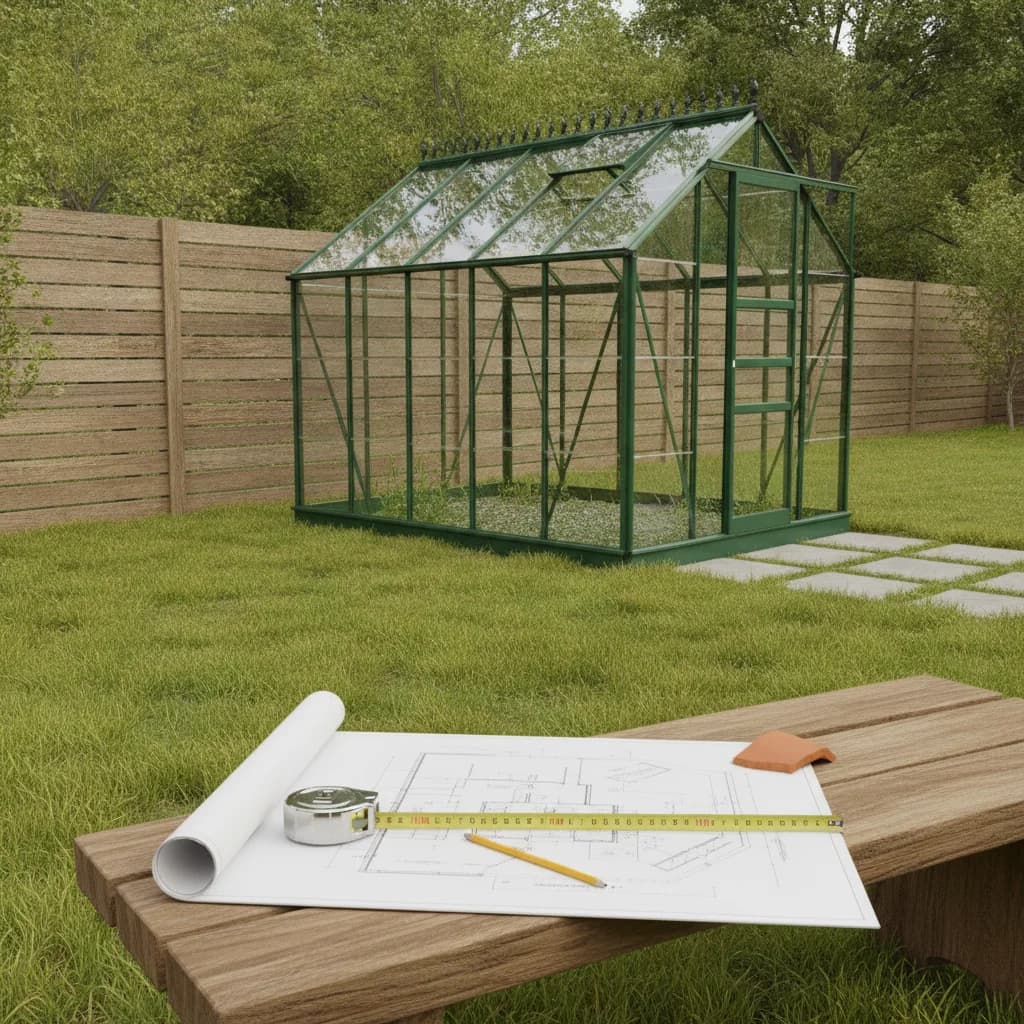
Most greenhouses under 120 sq ft skip a building permit, but setbacks, HOA rules, and property lines still apply. The check that stops projects late.
Installation
Quick answer: In most US areas a greenhouse under about 120 square feet needs no building permit, but that threshold varies by town and is only half the question. Even a permit-exempt greenhouse still has to obey zoning setbacks, often 5 to 10 feet from a property line, plus easements and any HOA rule on outbuildings. Adding a poured foundation, an electrical circuit, or plumbed water usually pulls it back into permit territory regardless of size. Check your city zoning page and your HOA covenant before you order, because a setback violation or an HOA denial is the line item that halts the project after the kit is already paid for. Confirm your local threshold at write time, since codes differ by municipality.
Best for
Buyers who want to know what to check before they order, so a zoning or HOA rule does not stop the project after the kit arrives.
Wrong fit
Buyers who need a formal code ruling for a large or attached structure. That is a call to your local building department, not a guide.
Tradeoff
A small freestanding greenhouse usually skips the permit but never skips the setback and HOA check. Adding a foundation, power, or water trades that simplicity for a permit.
In most US towns, a freestanding greenhouse under about 120 square feet does not need a building permit, but that number varies by municipality and it is only half the question. The permit is one gate. Setbacks, easements, and HOA rules are the other, and they apply even when no permit does. The greenhouse can be permit-exempt and still be illegal where you want to put it. That is the trap.
We don't sell greenhouses. We save you from buying the wrong one, and one of the fastest ways to get burned is to buy the right greenhouse and then discover you cannot legally site it. A permit or setback problem is the line item that stops the whole project after you have paid for the kit. This page tells you what to check, in what order, before you order. It is service, not legal advice, so confirm every threshold with your own town.
Quick Answer: What Triggers a Permit
Factor
Usually fine without a permit
Usually triggers a permit or review
Floor area
Under ~120 sq ft (varies by town)
Over ~120 to 200 sq ft
Foundation
Freestanding on gravel or skids
Poured concrete slab or footings
Utilities
None
An electrical circuit, gas, or plumbed water
Attachment
Freestanding
Attached to the house, which makes it an addition
Height
Low, single-story
Tall enough to hit a height limit
Location
Meets setbacks, not in an easement
Inside a setback, easement, or drainage line
These thresholds are common but not universal, so verify at write time against your city or county code. When a greenhouse crosses into permit territory it is almost always because of size, a permanent foundation, or utilities, not the greenhouse itself.
The Setback Is the Line That Actually Stops Projects
Setbacks are the minimum distance a structure has to sit from your property lines, and they apply whether or not you need a permit. Side and rear setbacks for a small accessory structure are often in the 5 to 10 foot range, but front setbacks are larger and corner lots have their own rules. Put the greenhouse a foot from the fence and you can be ordered to move it, permit or not.
Easements are the quieter version of the same problem. A utility or drainage easement running along the back of a lot means you cannot build there even though it is your land. Pull your plat or survey, or your municipal GIS map, and confirm the buildable area before you decide where the greenhouse goes. This is the same siting question that decides your base, so read it alongside the foundation and base guide, because a permanent slab is exactly the thing that turns a permit-exempt greenhouse into a permitted one.
The HOA Can Say No Even When the City Says Yes
If you are in an HOA, its covenant can be stricter than the city code, and it is enforced separately. Some HOAs ban outbuildings outright, some allow them only in certain materials or behind a fence line, and some require you to submit plans to an architectural committee before you build. None of that shows up when you check the municipal code, so check both. Read your covenant and, if there is an architectural review, get written approval before you order the kit. An HOA denial after delivery is a pure loss, and it is entirely avoidable with a ten-minute read up front.
Foundation, Power, and Water Change the Answer
A greenhouse sitting on a gravel-and-timber base with no utilities is the easy case. Add a poured concrete slab, an electrical circuit for heating or lighting, or a plumbed water line, and you have usually created a permitted project, because now inspectors care about the footing, the electrical work, and the plumbing. That is not a reason to skip the slab or the power if you need them, it is a reason to price the permit and inspection into the budget. Those utility runs are also real money on their own, covered in the real cost of a greenhouse. Size plays in here too, because the square-footage threshold is often what tips a greenhouse over the permit line, which is one more reason to settle what size greenhouse do I need early.
Your Pre-Order Checklist
Run these five checks before you place the order, in this order:
Look up your building-permit size threshold on your city or county building department page. Note the square footage and whether a foundation or utilities change it.
Find your zoning setbacks for accessory structures, side, rear, and front, and mark the buildable area on a sketch of your lot.
Check for easements on your plat, survey, or municipal GIS map.
Read your HOA covenant and submit for architectural approval if required. Get it in writing.
Decide your foundation and utilities last, because a slab, power, or water can move you into permit territory, and you want that priced in before you buy.
Do this and the permit question becomes a known cost, not a project-ending surprise. Skip it and you risk paying for a greenhouse you cannot legally put where you wanted it.
If You Want a Room, Not a Greenhouse
If what you actually want is a heated space to work, read, or sit in year round, the permit picture changes and so does the structure. A habitable four-season room is not a greenhouse, and the permit, insulation, and foundation requirements are different and heavier. That is an office pod. The base, setback, and permit concerns overlap, which is why it is worth weighing at backyardoffice.guide before you spend greenhouse money on the wrong building. If you do want a greenhouse, the shortlist is in best greenhouses.
Frequently Asked Questions
Do I really need a permit for a small greenhouse?
Usually not, if it is freestanding, under about 120 square feet, and has no poured foundation or utilities, but the threshold varies by town so check yours. The bigger point is that "no permit" does not mean "no rules." You still have to meet zoning setbacks and any HOA covenant even for a permit-exempt greenhouse. Confirm the size limit and the setbacks with your local building department before you order.
Can my HOA stop me from putting up a greenhouse?
Yes, and this is where people get caught, because the HOA is separate from the city. Your covenant can ban outbuildings, restrict materials or placement, or require you to submit plans to an architectural committee first, and it is enforced on its own. Read the covenant and get written approval before you buy, not after the kit is on your driveway. An HOA denial after delivery is money you do not get back.
How close to the property line can I put a greenhouse?
That is your zoning setback, and it is commonly 5 to 10 feet on the sides and rear for a small accessory structure, with a larger front setback. It varies by municipality and corner lots have special rules, so check your local code, not a rule of thumb. Also check for utility or drainage easements, because those can block part of your yard even inside the setback. Mark the buildable area on a sketch before you decide where it goes.
Does a greenhouse count as a permanent structure?
It depends on how you build it. Sitting freestanding on a gravel-and-timber base, it is usually treated as a temporary or accessory structure with light requirements. Pour a concrete slab or footings, run electrical, or plumb water to it, and most jurisdictions treat it as a permanent structure that needs a permit and inspection. The foundation choice is often what decides which side of that line you land on.
What happens if I build a greenhouse without a permit and get caught?
At best a stop-work order and an after-the-fact permit with a fee. At worse, if it violates a setback or an easement, you can be ordered to move or remove it entirely, which means eating the cost of the base and the labor. A neighbor complaint is the usual trigger. Checking the code and setbacks up front costs ten minutes and avoids all of it.
Do I need a permit if the greenhouse is attached to my house?
Almost always yes, because attaching it to the house typically makes it an addition rather than an accessory structure, and additions are permitted and inspected. A lean-to greenhouse against a wall is convenient and warmer, but it usually raises the permit bar, and it may pull in energy-code and structural checks the freestanding version avoids. Confirm with your building department before you commit to an attached design. Costs, models and the flashing detail at the wall are in the lean-to greenhouse guide.
Methodology
These guides are built from manufacturer documentation, public specifications, primary research where health claims matter, and repeated buyer questions that show up in real ownership and installation decisions.
Manufacturer responses can clarify pricing bands, warranty terms, support footprint, or common mistakes. They do not move a page up the shortlist on their own.