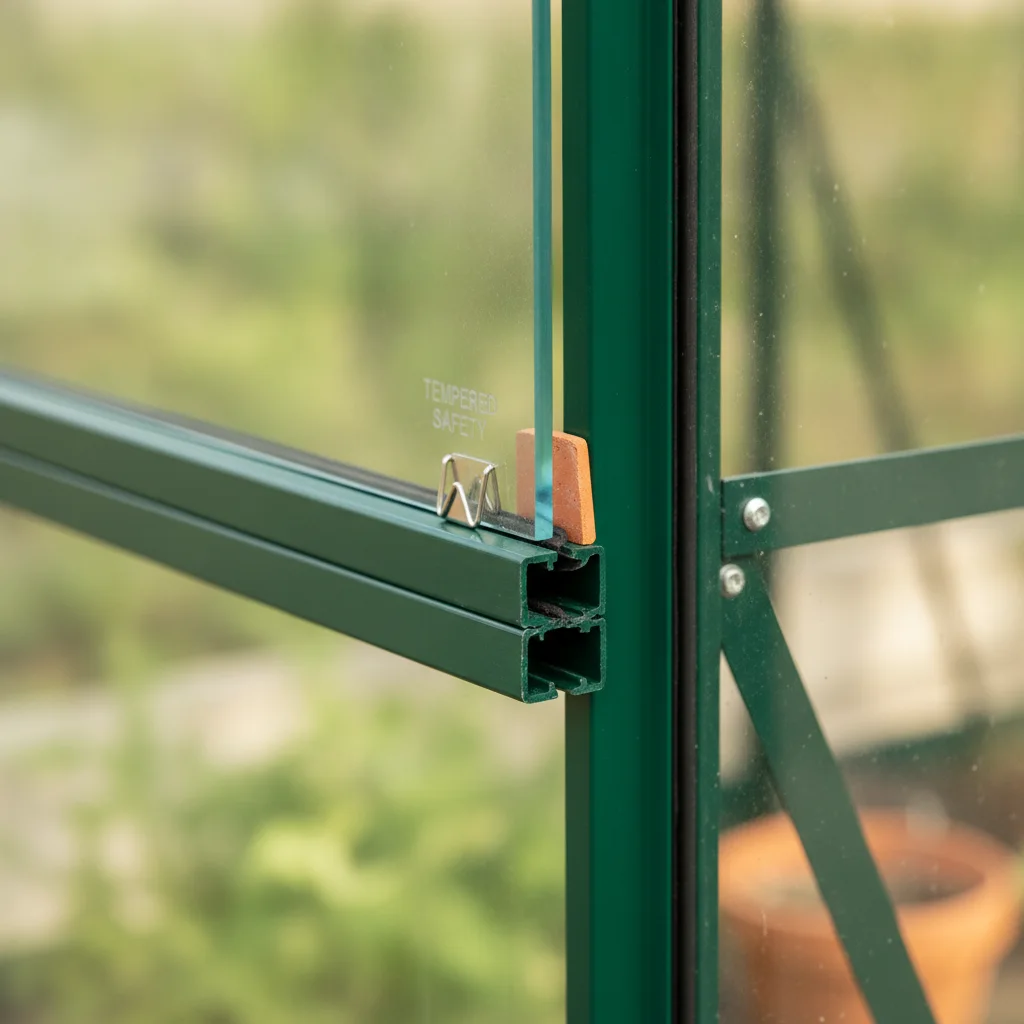
Tempered (toughened) glass is the safe glazing for a greenhouse, because when it breaks it crumbles into small blunt granules instead of the long knife-edge shards that annealed horticultural glass throws. Horticultural glass is cheaper and beautifully clear, but a pane breaking overhead or beside a child is a real hazard, and the cheapest kits use the most dangerous glazing of all. This is the part of a greenhouse purchase where "cheap" and "safe" pull hard against each other.
This page carries no product links and no ranking. It explains the hazard so you can choose glazing with your eyes open. The full tradeoff on cost, light, insulation, and hail lives in glass vs polycarbonate, and this page is the safety half of that decision.
Quick Answer: The Three Glazing Choices, Ranked by Safety
Greenhouses are glazed with one of three things, and they fail very differently.
- Tempered (toughened) glass. Heat-treated so it is several times stronger than ordinary glass, and when it does break it shatters into small blunt pieces. This is safety glazing, and it is what serious greenhouses use.
- Twin-wall or triple-wall polycarbonate. A plastic that does not shatter at all. It is the most impact- and hail-resistant option, and the safest around children, though cheap versions yellow and go brittle over time.
- Annealed horticultural glass. Ordinary float glass, usually 3mm, that has not been toughened. It is the clearest and cheapest, and it breaks into large sharp shards. This is the falling-glass hazard.
If safety is the question, the order is clear: tempered glass or good polycarbonate first, annealed horticultural glass last.
Why Annealed Horticultural Glass Is the Hazard
Horticultural glass is annealed float glass. It has not been through the heat treatment that makes tempered glass strong, so it breaks the way a dropped window breaks, into long, heavy, sharp pieces with edges that cut deeply. Now put that glass overhead in a roof pane, or at knee height next to a path where a child runs, and the risk is obvious.
The failures that break it are ordinary. A branch comes down in a storm. A ball hits the roof. The frame racks slightly on an uneven base and puts a pane under strain until it goes. Hail. When annealed glass loses, it does not just crack, it comes down in shards.
Tempered glass changes the outcome of the same accident. It is roughly four to five times stronger than annealed glass of the same thickness, so it takes more to break it, and building safety-glazing standards such as ANSI Z97.1 and the federal rule at 16 CFR 1201 exist precisely because of how differently the two behave when they finally do break. Verify the specific standard a product claims to meet at write time. The premium greenhouse makers glaze in 3 to 4mm toughened glass for exactly this reason.
Where Safety Glazing Is Not Optional
Building codes require safety glazing (tempered or laminated) in what they call hazardous locations, and a greenhouse is full of them. The residential code, IRC Section R308, calls out glazing in and next to doors, and glazing low to the floor, among others. The logic carries straight into a greenhouse:
- Roof and overhead panes, where a break falls on whoever is inside.
- Door panels and the glass right beside a door, where people pass and push.
- Low panes near a path or a bench, at the height a child or a falling adult meets them.
If any of your glazing sits in these spots, that is where tempered glass earns its cost first, even if you glaze the rest more cheaply. Check what your local building department requires for your structure, because rules vary and are worth confirming before you buy.
Cheap Kits: Dangerous Glass or Brittle Poly
The cheapest flat-pack greenhouses cut cost at the glazing, and they do it in one of two ways, both of which show up later.
- Thin annealed glass, sometimes in small panes held by flimsy clips, on a frame that flexes. The flexing frame stresses the glass, and annealed glass under stress is the pane that cracks and drops shards. This is the worst combination for safety.
- Brittle single-wall polycarbonate or thin poly film. It does not cut you, which is the one point in its favor, but the cheap versions yellow, go cloudy, and turn brittle in two to three seasons, then crack and blow out. You do not get hurt, you get a greenhouse that stops being a greenhouse.
Neither is a scandal on its own. The problem is a listing that shows a bright catalog photo and stays quiet about which glazing you are actually buying. A twin-wall polycarbonate kit from a real maker is a genuinely safe, hail-tough choice. A no-name single-wall kit is a two-season purchase. The word "polycarbonate" alone does not tell you which one you have.
So What Should You Choose
Match the glazing to how you will use the garden, and let safety break the ties.
- Kids or pets in the garden, or a windy or hail-prone site. Twin-wall polycarbonate is the safe, forgiving pick. It will not shatter, it shrugs off hail and stray balls, and it insulates better than glass. Buy it from a real maker so it lasts.
- You want the look and light clarity of glass. Choose tempered (toughened) glass, not annealed horticultural, especially for the roof and any low or door-side panes. This is what the premium glasshouses do.
- Budget is tight but you want it to last and stay safe. A good twin-wall polycarbonate kit beats a cheap annealed-glass kit on both safety and lifespan, and it is often the smarter buy. Saying so is not a compromise, it is the safer long-term answer for a lot of buyers.
The rest of that decision, the cost, the light quality, the insulation numbers, is laid out in glass vs polycarbonate, and where each brand lands is in best greenhouses.
The Other Structural Failures, in Order
Glass safety is one of four structural questions worth reading together, because the same base and frame decisions touch all of them.
The glazing choices that survive hard winters are covered in the best greenhouses for cold climates, and the "I wish I had known" stories are in greenhouse buying regrets.
Frequently Asked Questions
Is greenhouse glass actually dangerous if it breaks?
Annealed horticultural glass is, because it breaks into large sharp shards that cut deeply, and a broken roof pane comes down on whoever is inside. Tempered glass is much safer, because it breaks into small blunt granules instead. Polycarbonate does not shatter at all. The danger is real with cheap annealed glass and largely removed by choosing tempered glass or good polycarbonate.
What is the difference between tempered and horticultural glass?
Horticultural glass is ordinary annealed float glass, usually 3mm, that is cheap and very clear but breaks into sharp shards. Tempered glass is the same glass heat-treated so it is roughly four to five times stronger and breaks into small blunt pieces. Horticultural glass costs less and is fine in low-risk panes. Tempered glass is the safe choice for roofs, doors, and any pane near people.
Is a polycarbonate greenhouse safer than a glass one?
For impact and breakage, yes. Twin-wall or triple-wall polycarbonate does not shatter, so it is the most forgiving option around children, in wind, and in hail. The tradeoff is that cheap single-wall poly yellows and goes brittle in a few seasons, so buy twin-wall from a real maker. If you want glass, tempered glass closes most of the safety gap.
Is tempered glass worth the extra cost over horticultural?
For the roof, the door panels, and any low panes near a path, yes, because those are exactly the spots where a broken annealed pane hurts someone. It costs more, but a broken pane behaves completely differently, blunt granules instead of shards. If your budget only stretches to tempering some of the glazing, temper the overhead and door-side panes first. Check whether your local building code requires safety glazing in those locations anyway.
Will greenhouse glass shatter in hail?
Annealed horticultural glass is the most likely to, and it comes down in sharp pieces when it does. Tempered glass resists hail far better and breaks safely if it loses. Twin-wall polycarbonate is the most hail-resistant of all and does not shatter, which is why it is the common pick in hail-prone regions. If big hail is a regular event where you live, polycarbonate is the practical answer.
Sources