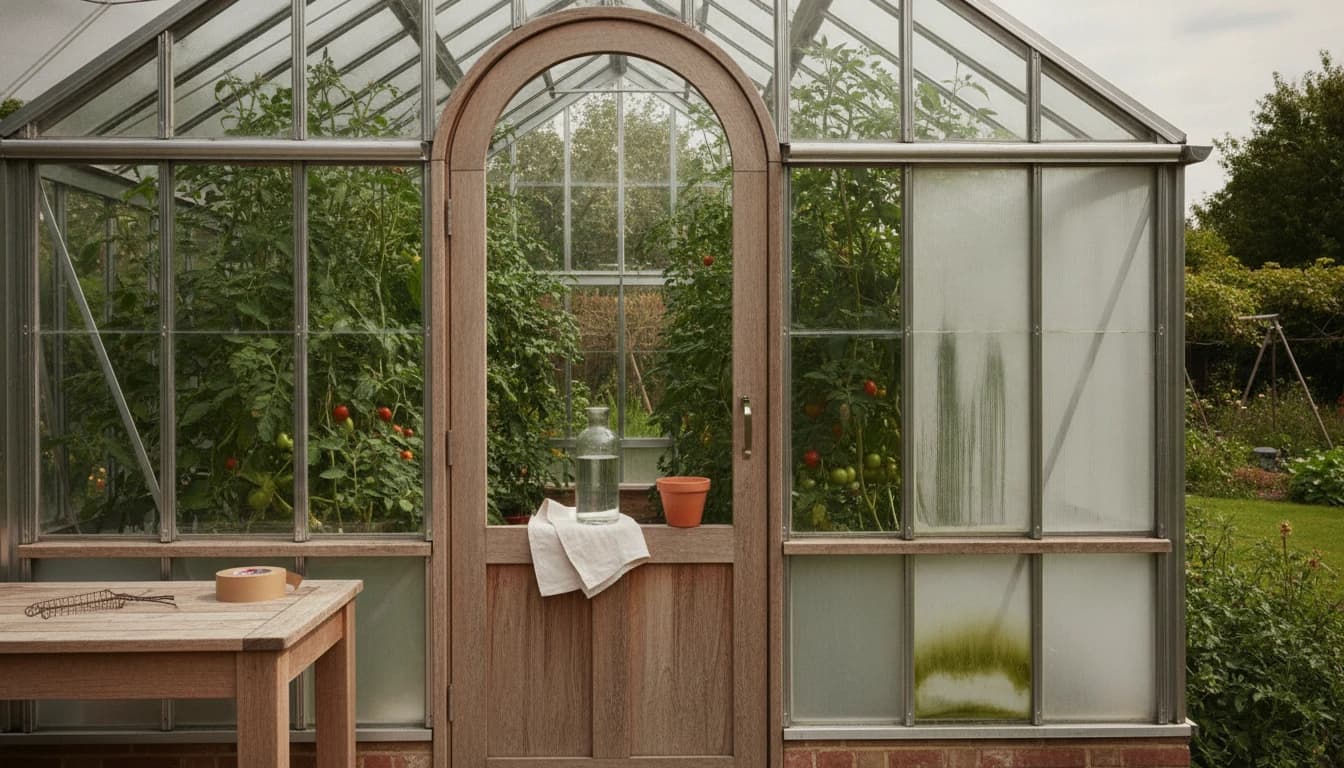
Greenhouse Maintenance: What Upkeep Actually Costs
Cleaning, reglazing, gasket and vent wear, and frame care by material, with current repair-hardware prices and what manufacturers still won't publish.
Installation
Quick answer: A greenhouse needs real annual upkeep, not just a one-time build. The Royal Horticultural Society recommends washing the glazing at least once a year, warm water is enough, no cleaning products needed, since algae and dirt measurably cut the light reaching plants. Aluminum frames need no treatment. Wood frames like Yoderbilt's want a stain recoat every 2 to 3 years, a cycle the company itself only warranties for 2. Galvanized steel frames like Planta's self-protect against scratches under about 1/8 inch and only need a zinc-rich touch-up for larger gouges. DIY glazing repair hardware, clips, patching tape, wiggle wire, runs $5 to $75 per item at a specialty retailer, checked October 3, 2026. What nobody sells you a number for: Palram, Exaco Riga, and Janssens still do not publish what a replacement panel or pane actually costs.
Best for
Buyers who already own a greenhouse, or are weeks from buying one, and want the real ongoing cost and schedule instead of a one-time build number.
Wrong fit
Buyers still choosing a glazing or frame material. Start with glass vs polycarbonate and aluminium vs wood, then come back once you own the thing.
Tradeoff
Aluminum and glass need almost no maintenance but cost more upfront or lose to hail. Wood and polycarbonate cost less upfront but commit you to a real schedule, staining or eventual reglazing, that most kit prices never mention.
A greenhouse is not a one-time purchase. It is a structure that sits outside in UV, wind, snow, and condensation for decades, and every part of it wears on its own schedule.
Most buying guides stop at the kit price. This one covers what happens after delivery: what to clean, what to check, what wears out by material, and what it actually costs when something needs replacing, priced against the brands this site already tracks.
Quick Answer: The Maintenance Calendar
Task
How often
Who needs it
Real cost, checked October 3, 2026
Wash glazing, inside and out
At least once a year (RHS); twice if used intensively
Every greenhouse
Warm water, no products needed
Check fasteners, gaskets, vent hinges
Annually, before winter
Every greenhouse
Free, a wrench and 20 minutes
Re-stain or re-oil wood frame
Every 2-3 years
Wood frames (Yoderbilt, premium cedar)
$30-$38/gallon for a generic exterior stain; Yoderbilt's own stain is phone-order only, no published price
Touch up galvanized steel scratches
Only if bare steel shows over a wide area
Steel frames (Planta)
Small scratches need nothing; wider damage needs a zinc-rich touch-up compound
Reglaze a cracked or popped panel
As needed
Polycarbonate kits
Clips $0.20 each, patching tape $9.99, wiggle wire bundle $71.50; no brand publishes a full panel price
The Royal Horticultural Society recommends cleaning every growing structure, glass or plastic, at least once a year, more often if you use it intensively. The method is almost disappointingly simple: warm water is enough, no cleaning products are required, though a flexible scraper and a brush handle algae and moss trapped between panes or in corners.
That matters more than it sounds like it should. The University of Arkansas's greenhouse glazing course material is blunt about why: glazings should be periodically washed inside and out because dirt and debris block light and scratch the surface, and a glazing that has reached its life span and begun to yellow should be replaced rather than cleaned around. The RHS adds the plant-health angle: algae, liverworts, and moss accumulating on glazing reduce the light reaching the plants and make the floor slippery underfoot.
Time it for early spring if you are prepping for the growing season, or autumn if you want the plants to use what winter light there is. An empty greenhouse over winter can wait until spring.
If you have polycarbonate, check your manufacturer's cleaning document before reaching for a glass cleaner. Palram's own FAQ for its Suntuf and Sunlite polycarbonate is specific: warm water and a mild household detergent, wiped with a soft cloth. It explicitly warns against ammonia-based or other solvent cleaners and abrasive sponges or brushes, both of which can scratch or cloud the panel surface. That is Palram's own documented instruction, not a universal rule we are extending to Exaco Riga or Janssens, so check your own kit's document rather than assuming it is the same everywhere.
Check the Frame Once a Year, Especially Aluminum
Aluminum does not rot, rust, or need painting, which is why it is the default frame material across the market, covered in full in aluminium vs wood greenhouse frames. But "maintenance-free" does not mean "never move."
Aluminum has a linear thermal expansion coefficient of about 23 micrometers per meter per degree Celsius, an uncontested materials-engineering constant. Over a real seasonal swing, that adds up to measurable movement in a frame many meters long, which is the physical reason bolts loosen, clips shift, and rubber seals compress over a year of heating and cooling. We independently verified that physical constant. We did not find a manufacturer or extension document that sets a required bolt-check interval, so treat "walk the frame with a wrench once a year, ideally before your first storm season" as sound practitioner advice, not a documented warranty requirement.
While you are at it, check the gaskets and weatherstripping where panels meet the frame for cracking, brittleness, or compression that has lost its spring, and confirm vents open and close without binding. A stuck vent is a ventilation failure waiting for a hot afternoon, covered straight in ventilation and overheating and automatic vent openers.
Frame Care by Material
Aluminum: nothing to do. No rust, no rot, no scheduled treatment. The annual fastener and gasket check above is the whole job.
Wood: a real recurring cost. Yoderbilt's own FAQ puts a number on it that most buyers never see before ordering: the factory stain carries a 2-year warranty, but the company recommends re-staining every 2 to 3 years to keep the look up, a maintenance cycle that outlasts its own warranty by a year. The stain is a proprietary oil-based Wood Defender blend in "Yoder Brown" or "Yoder Gray," ordered directly from Yoderbilt by phone, and the FAQ does not publish what a replacement can costs. For a dated anchor on what a generic exterior wood stain costs at retail, Thompson's WaterSeal solid stain runs roughly $30 to $38 a gallon at Lowe's, checked October 3, 2026, a general market price, not a Yoderbilt-specific or greenhouse-specific figure. Yoderbilt also recommends lacquer thinner for removing sap from the wood. Premium cedar frames hold up differently (cedar resists rot naturally) but still want periodic oiling or staining to keep their color, per aluminium vs wood.
Galvanized steel: mostly self-protecting. Planta's Gen III kits use a galvanized steel frame, reviewed in full in the Planta review. The American Galvanizers Association's own technical guidance is reassuring here: small scratches, roughly under 1/8 inch wide, generally need no repair at all, because the surrounding zinc coating sacrifices itself to keep the exposed steel from rusting, a property called cathodic protection. Only when a wider area of bare steel is exposed, from a deep gouge, drilling, or a hard impact, does the Association recommend a cold-galvanizing (zinc-rich) touch-up compound. Most owners wash galvanized panels once or twice a year and do nothing else to the frame.
Reglazing: The Line Item No Brand Prices
This is the gap we have flagged before on this site, and it has not closed. Comparing Palram Canopia, Exaco Riga, and Janssens kit by kit, none of the three publishes a price for a replacement polycarbonate panel or glass pane, full detail in Palram vs Exaco Riga vs Janssens. The closest numbers that exist are owner reports, not price lists: one Janssens owner reported paying roughly $150 for a spontaneously shattered tempered pane in late 2023, and an Exaco Riga owner reported the company replaced deteriorating panels for the cost of shipping after discovering the panel's UV-protected side had been installed facing the wrong way. Neither is a published price you can plan around, so ask your own dealer for a written panel-replacement cost before you buy, the same advice this site gives in the quote checklist.
What you can plan around is the DIY repair-hardware layer, priced at a specialty retailer and checked October 3, 2026:
Item
Price
Polycarbonate glazing spring clips, 25-pack
$4.99 (about $0.20 each)
Poly patching tape
From $9.99
Top sealing aluminum tape
$14.99
Snap clamps, 10-pack
$4.90
Spring lock (wiggle wire) bundle
$71.50
Plastic grommets, 50-pack
$16.99
Vent tape
$40.45
That hardware fixes a popped panel edge, a torn poly film, or a loose clip. It does not replace a cracked or yellowed panel outright, which is a brand-specific part with no published price, the gap above.
Polycarbonate's Built-In Expiration
Polycarbonate yellows under UV exposure over roughly 10 to 15 years, a slow, expected process, not a defect, covered with the full replacement-cost math in glass vs polycarbonate. Good UV-coated panels slow the fade but do not stop it. Budget for a full reglaze once in the life of a polycarbonate kit, and read the warranty's proration schedule before you assume "10-year warranty" means a free panel in year nine, since it almost never does.
Vents and Moving Parts
Wax-cylinder automatic vent openers are mechanical. The automatic vent opener guide already names "no maintenance check" as one of the common ways buyers end up with a vent stuck shut on the one afternoon they needed it open. Lubricate hinge points and confirm full travel by hand once a year, the same visit you use to check fasteners and gaskets. If a vent binds or the opener stops responding to heat, fix it before the next hot spell, not after.
Frequently Asked Questions
How long do polycarbonate greenhouse panels actually last?
Roughly 10 to 15 years under normal UV exposure before yellowing becomes significant, per the full comparison in glass vs polycarbonate. Reddit buyers ask this exact question before they buy: "Does anybody have any information regarding the longevity of their poly carbonate panels?" The real answer is that it depends on the UV coating quality and whether the panel was installed with the coated side facing out, since at least one documented case involved a panel installed backward.
How much does it cost to replace a greenhouse panel?
Nobody in the mid-market tier (Palram, Exaco Riga, Janssens) publishes a number. The only data points are owner reports: about $150 for one shattered Janssens pane, and a free replacement (shipping only) for one Riga owner whose panel had a known defect. Ask your dealer for a written per-panel price before you buy, not after something breaks.
Does a wood-frame greenhouse need a lot of maintenance?
Yes, on a real schedule. Yoderbilt's own FAQ recommends re-staining every 2 to 3 years, and the factory stain itself only carries a 2-year warranty. Cedar frames resist rot better than softwood but still want periodic oiling to hold their color. If you want zero frame maintenance, choose aluminum, covered in aluminium vs wood.
Do galvanized steel greenhouse frames rust?
Rarely, and small scratches are not an emergency. The American Galvanizers Association says scratches under about 1/8 inch generally need no repair because the surrounding zinc coating protects the exposed steel. Only a wider gouge down to bare steel needs a zinc-rich touch-up.
Are there replacement clips or hardware if mine are missing or broken?
Yes, and they are inexpensive. One buyer asked almost this exact question after an aftermarket kit shipped short: "Has anyone found correct size clips for this greenhouse? Or recommend an alternate solution?" Universal polycarbonate glazing spring clips run about $0.20 each at a specialty retailer, far cheaper than a full panel.
A single, brand-published replacement panel or pane price. Palram, Exaco Riga, and Janssens all still decline to publish one as of this check.
Yoderbilt's price for a replacement can of stain. It is phone-order only.
A greenhouse-specific professional repainting or re-staining labor rate. The Thompson's WaterSeal figure above is a general exterior-stain retail price, not a greenhouse-specific or Yoderbilt-specific product or labor quote.
Whether Exaco Riga or Janssens publish the same ammonia and abrasive-cleaner warning Palram states for its own polycarbonate. Only Palram's document was checked this run; check your own kit's manual before cleaning.
Any manufacturer-documented bolt-check or fastener-inspection interval. The annual check recommended above is grounded in aluminum's independently verified thermal expansion behavior, not a warranty requirement from any brand in this comparison.
Methodology
These guides are built from manufacturer documentation, public specifications, primary research where health claims matter, and repeated buyer questions that show up in real ownership and installation decisions.
Manufacturer responses can clarify pricing bands, warranty terms, support footprint, or common mistakes. They do not move a page up the shortlist on their own.